
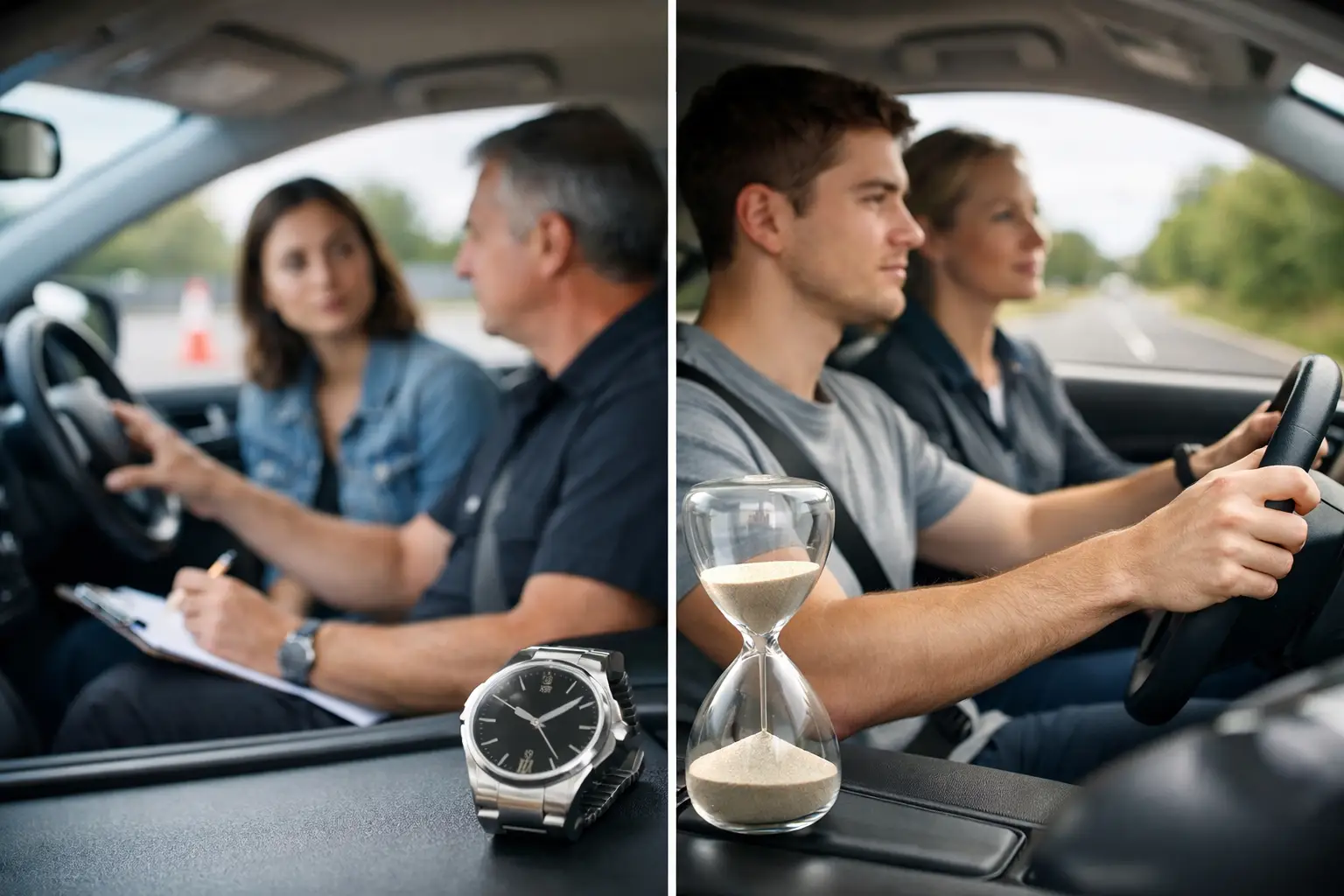
A driving lesson can feel like a big step before you even turn the key, especially if you are nervous, busy, or returning to driving after years away. Choosing between one hour or two hour lessons is not about picking the option that sounds toughest or quickest. It is about choosing the time that helps you learn safely, stay focused and make steady progress.
At D4Driving School of Motoring, lessons are tailored around you. That includes the length of the session, whether you are learning in a manual or automatic car, and what you need most at your current stage. Some learners gain confidence brilliantly in a focused hour. Others need more time to settle in, practise properly and finish without feeling rushed.
One Hour or Two Hour Lessons: the Real Difference
A one-hour lesson is a compact, purposeful session. It can be ideal when you are learning a specific skill, fitting tuition around college or work, or building your confidence gradually. You will have time to recap, practise and receive feedback, but the lesson needs a clear focus. There is less room for travelling to a quieter practice area, working through a new challenge and then repeating it several times.
A two-hour lesson gives you more time behind the wheel and more space to develop a skill fully. Rather than practising a roundabout once or twice before heading back, you can approach it in different ways, deal with changing traffic and review what happened. That deeper practice can be particularly useful once you are driving on busier roads or preparing for your test.
Neither duration automatically means better driving. Progress comes from good instruction, regular practice and a lesson plan that matches your learning style. A tired learner after two hours will not absorb as much as a refreshed learner after one. Equally, someone who needs time to relax may find that an hour ends just as they are getting into their stride.
When One-Hour Driving Lessons Make Sense
One-hour lessons suit many learners, particularly at the beginning. Your first few sessions may involve finding a comfortable driving position, understanding the controls, moving away and stopping safely, and learning how to steer accurately. That is plenty to take in. A shorter session can leave you feeling encouraged rather than overloaded.
They are also a sensible option if your diary is packed. A regular weekly hour is often more useful than waiting several weeks for a longer slot. Driving is a practical skill, and consistency helps it stick. Frequent contact with the car, the roads and your instructor keeps your last lesson fresh in your mind.
For nervous learners, an hour can feel manageable. You know there is a clear finish point, which can take some of the pressure away. As confidence grows, you can increase the lesson length when it feels right. There is no prize for exhausting yourself on lesson one.
One-hour sessions work well for targeted refreshers too. If you need to practise bay parking, get comfortable with dual carriageways, or rebuild confidence after a break, a focused hour can be exactly what is needed.
The trade-off is time. If your pick-up point is some distance from the best roads for the skill you are working on, part of the lesson will naturally be spent getting there and back. That does not make the lesson less valuable, but it can mean fewer repetitions of the main exercise.
Why Two-Hour Lessons Can Speed Up Progress
A two-hour lesson does not mean two hours of being told what you did wrong. Done properly, it gives you time to learn, practise, make mistakes safely, try again and see improvement within the same session. That repeated practice is where confidence starts to feel genuine.
Longer lessons are often valuable once you can move the car safely and are ready to cover more varied roads. You may begin in a quieter area, move onto busier junctions, tackle roundabouts, practise independent driving and then finish with a manoeuvre or test-route work. The lesson has a natural flow instead of stopping halfway through an important topic.
They can be especially useful for learners in Peterborough who want to experience different road types in one session. Town driving, larger junctions, faster roads and residential areas all require slightly different observation and planning. More time allows your instructor to build that variety into the lesson without cramming it in.
Two-hour sessions also suit pre-test preparation. Near your test, it is helpful to sustain concentration, manage a wider range of situations and complete a realistic mock test with time afterwards for useful feedback. A longer lesson gives you room to work on the detail that can make a real difference, such as planning at roundabouts, appropriate speed, mirror checks and dealing calmly with an unexpected mistake.
The main consideration is energy. Concentration is a driving skill in its own right. If two hours leaves you mentally foggy, frustrated or unable to remember the feedback, it may not be the right choice every week. Your instructor should be honest about that and adjust the plan, not simply push the longest slot available.
Do Not Forget the 1.5-Hour Option
There is a helpful middle ground. A 1.5-hour lesson gives you more practical driving time than a one-hour session, while remaining less demanding than two full hours. For many learners, it is the sweet spot.
It gives enough time to travel beyond your immediate area, practise a skill several times and still finish while your concentration is strong. It can be an excellent step up for someone who began with one-hour lessons but is not yet ready for two hours, or for a learner whose work and family commitments make a two-hour slot difficult.
The best lesson length can change as you progress. You might start with one hour, move to 1.5 hours when you are ready for more complex roads, then use two-hour sessions for dedicated test preparation. A personalised plan should be flexible enough to do that.
Think About Your Goal, Not Just the Clock
If your priority is learning from scratch without feeling overwhelmed, start with the lesson length that makes you comfortable enough to return next week. Feeling safe, understood and in control of the pace matters more than trying to rush through the syllabus.
If your test is approaching, longer sessions may offer better value in terms of focused practice. They allow your instructor to identify patterns, rather than judging a skill from one quick attempt. For example, you may handle one roundabout well but need more practice with lane choice, timing and observations across several different layouts.
Your budget matters too, and it is sensible to be clear about it. A shorter lesson can make weekly tuition easier to manage. A longer lesson may reduce repeated travel time and create more productive practice within each appointment. The best value is not always the lowest session cost. It is the option that gives you useful, sustainable learning without gaps so long that you spend half the next lesson revisiting old ground.
How to Choose the Right Lesson Length
Ask yourself a few honest questions before booking. How long can you concentrate without becoming tense? Are you able to have regular lessons? Do you need a quick confidence boost, or do you need time for detailed test preparation? And after a lesson, do you feel pleased with what you have learned or completely worn out?
You do not have to make a permanent decision. A good driving instructor will watch how you respond, explain where your time is best spent and adapt your lessons as your skills develop. If a one-hour session is repeatedly ending just as you are ready to practise a new task, that is a useful sign to consider 1.5 or two hours. If longer lessons are leaving you drained, reducing the duration is sensible, not a setback.
Make Every Lesson Count
Whatever lesson length you choose, arrive ready to learn. Get enough rest, wear comfortable shoes with a thin sole, and mention anything that may affect your focus that day. If a particular area worries you, such as roundabouts, parking or meeting traffic on narrow roads, say so. Your lesson is the right place to work through it patiently.
Driving freedom is built one safe decision at a time. Start with the session length that feels achievable, keep it regular, and let your confidence lead the next step.