
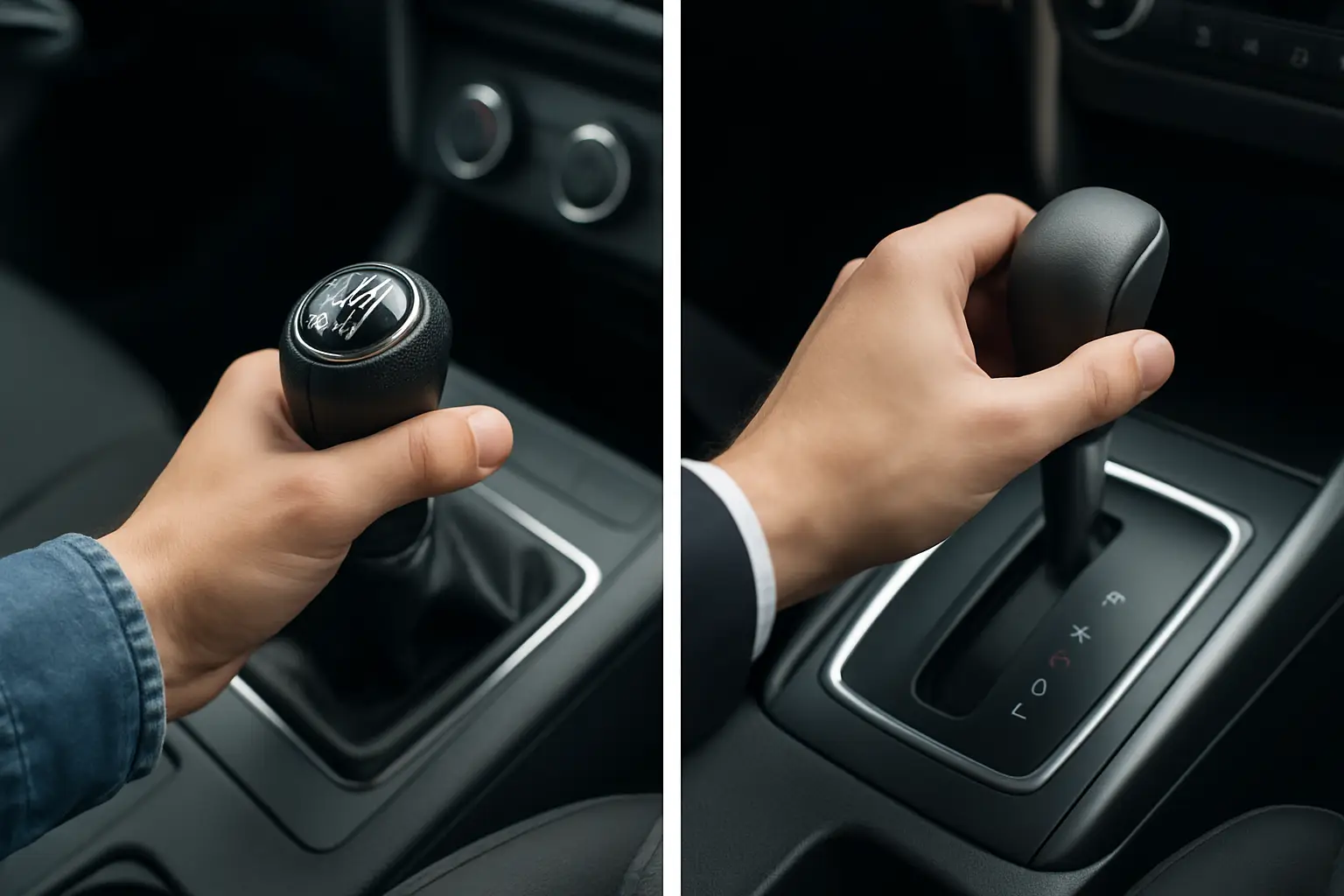
If you’ve ever sat in the passenger seat watching someone’s feet dance between clutch and brake, it’s easy to think: “Do I really need to learn that?” On the other hand, if you’ve been told “manual gives you more options”, you might worry that choosing automatic is taking the easy route. The truth is more reassuring than the debate makes it sound - both routes can get you to safe, confident, test-ready driving. The best choice is the one that fits how you learn, what you’ll drive, and how soon you want to be independent.
Manual or automatic lessons - which is better for you?
When people ask “manual or automatic lessons which is better”, they’re usually asking two questions at once. First: which will be easier to learn and pass in? Second: which will set me up best for real life after the test? Those answers can be different for different learners.
A good way to decide is to look at the whole journey: your first few lessons, how quickly you build confidence, what the driving test will feel like, and what your day-to-day driving will be afterwards. Let’s break it down in a way that helps you choose with clarity, not pressure.
The real difference in the car (and in your head)
Manual driving adds one more system to manage: clutch control and gear changes. That sounds simple written down, but in the early stages it can feel like a lot because everything is new at once - steering, mirrors, road positioning, awareness, and dealing with other road users.
Automatic removes the clutch and gear decisions, which usually frees up mental space. Many learners find they can focus earlier on reading the road, judging gaps, and staying calm at busy junctions. If nerves are a big factor for you, that extra breathing room can matter.
Manual, however, can build confidence in a different way. Once clutch control “clicks”, many learners feel more in command of the car, especially at low speeds and on hills. The key is accepting that manual often has a bumpier start, but it gets smoother with structured practice.
Learning curve and confidence - what most learners experience
Automatic lessons often feel more comfortable from lesson one. You can usually move away and stop smoothly much sooner, and that early progress can be a big confidence boost. If you’re an anxious learner, or you’ve had previous lessons that left you feeling overwhelmed, automatic can be a kinder re-entry.
Manual lessons can feel slower at the beginning because a portion of each session is devoted to clutch control, pulling away, changing gears, and preventing stalls. That doesn’t mean you’re “behind”. It simply means you’re learning an extra skill.
Where manual can become frustrating is when a learner is already juggling a lot outside of driving - exams, work shifts, childcare, or a packed schedule. If your brain is already full, learning manual can feel like one demand too many. In that scenario, automatic isn’t a shortcut - it’s a sensible way to keep learning steady and enjoyable.
Driving test considerations (and what your licence allows)
The driving test itself is the same standard of safe driving, whether you’re in a manual or an automatic. You still need good observation, correct positioning, appropriate speed, and calm decision-making.
The main practical difference is what happens afterwards. If you pass in a manual, you can drive both manual and automatic cars. If you pass in an automatic, you can only drive automatics.
That licence restriction is often the deciding factor. If you know you’ll need to borrow a family car that’s manual, or you want the widest possible options for your first car, manual keeps the door open. If you already have access to an automatic, or you’re planning to buy one, an automatic-only licence may suit you perfectly.
Cost, availability, and the “first car” reality
People often assume automatic is always more expensive. It can be, but the full picture depends on what you compare.
Manual cars are more common on the used market, and they can be cheaper to buy and insure, particularly in the lower price brackets. That’s one reason manual remains popular for new drivers.
Automatic cars can cost more upfront, but there’s an important shift happening: more newer cars are automatic by default, especially hybrids and electric vehicles. If your plan is to go newer, or you’re thinking ahead to an electric car, automatic starts to look less like a premium choice and more like the direction the market is moving.
Lesson costs can vary based on instructor availability and vehicle running costs. Instead of focusing only on the hourly price, it’s worth thinking about total learning time. If you learn faster and with fewer setbacks in an automatic because you feel calmer and more consistent, the overall spend can balance out.
Lifestyle and driving environment - Peterborough, Kettering, and Grantham
Where you’ll be driving matters. If your routes include lots of roundabouts, stop-start traffic, and busy junctions, automatic can make day-to-day driving feel more relaxed because you’re not constantly working the clutch.
Manual can be very manageable in these conditions too, but it demands more coordination, especially during the learning phase. If you’re practising after lessons with a family member, you’ll also need to match the car you’re practising in. Plenty of learners discover late on that they’re learning in one transmission but practising in another, which can slow progress.
For more rural routes or steady A-road driving, both transmissions can feel equally straightforward once you’re up to speed. The difference then becomes more about preference and long-term flexibility than the local road layout.
Who manual lessons tend to suit best
Manual lessons are often the better fit if you want maximum freedom after you pass, you expect to drive different cars, or you’re aiming for a broader choice of cheaper first cars. They can also suit learners who enjoy learning a skill step by step and don’t mind a bit of repetition early on.
Manual can also be a strong choice if you’re already comfortable with coordination tasks - for example, if you ride a motorbike, play certain sports, or simply pick up physical routines quickly. That doesn’t mean you must be “naturally talented”. It just means the learning curve may feel more satisfying than stressful.
Who automatic lessons tend to suit best
Automatic lessons are often the better fit if you want to reduce overload and build road awareness first, if you’re a nervous learner, or if you’ve struggled with stalling and it’s knocked your confidence.
They can also suit learners with tighter schedules. When you spend less lesson time on clutch and gear routine, you may get to complex junctions, roundabouts, and independent driving practice sooner. If your priority is becoming safely mobile as efficiently as possible, that can be a sensible advantage.
Automatic is also a strong option if you know you’re heading towards an electric car in the next few years. EVs are automatic, and learning in an automatic can feel more aligned with where you’re going.
A practical way to decide without second-guessing
If you’re genuinely torn, base your decision on three questions.
First, what car will you realistically drive after you pass? Not the ideal scenario - the likely one. If it’s manual, learning manual avoids later restrictions. If it’s automatic, you can choose automatic with confidence.
Second, how do you cope when you’re learning something new under pressure? If you tend to tense up, rush, or feel flustered, automatic may help you settle and build confidence earlier. If you prefer mastering technical skills and you don’t mind a slower start, manual could suit you.
Third, what’s your timeline? If you need to pass for a new job, university commute, or family responsibilities, your best route is the one that keeps lessons consistent and progress measurable.
If you’d like a calm, instructor-led view based on your starting point, a personalised lesson plan can make the choice feel much easier. At D4Driving School of Motoring, lessons are structured in clear time blocks and tailored around your goals, so you’re not guessing what you should be working on next.
What matters more than the transmission
Manual versus automatic is a real decision, but it’s not the only one that affects how quickly you improve. The biggest difference-maker is the quality of the learning process: patient instruction, a plan that matches your current level, and enough repetition to turn skills into habits.
Whichever route you choose, aim for lessons that build confidence in stages. Early lessons should focus on control and safety. Mid-stage lessons should build consistency at junctions, roundabouts, and meeting situations. Later lessons should feel like test driving - independent, calm, and predictable.
You’re not trying to become a racing driver. You’re learning to be a safe, steady, confident driver who can handle real roads on a normal day.
Manual or automatic lessons which is better - the honest answer
Better is the option that helps you learn safely, progress steadily, and pass with real confidence rather than luck. Manual is better if you need maximum flexibility and want a full licence with the broadest options. Automatic is better if it helps you stay calm, focus on the road, and build momentum without the clutch becoming a constant obstacle.
Choosing automatic isn’t “giving up”. Choosing manual isn’t “making life harder for no reason”. Both are valid. Your job is to choose the route that keeps you turning up for lessons, learning properly, and enjoying the moment when driving stops feeling scary and starts feeling like freedom.
A final thought to carry into your first lesson: confidence doesn’t arrive all at once. It’s built in small, repeatable wins - one clean pull-away, one calm roundabout, one good decision at a time.