
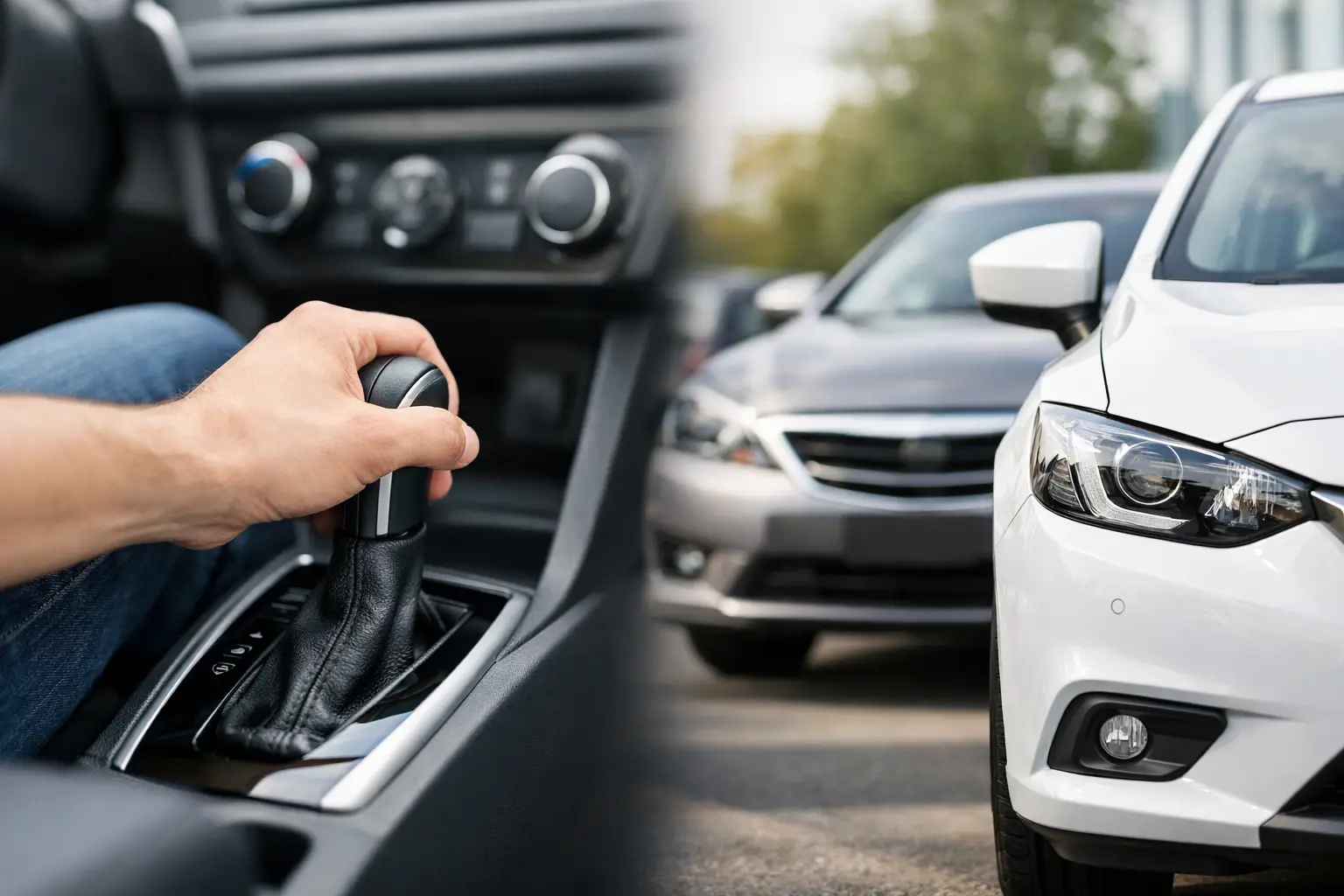
If you are asking, "is automatic licence valid for all cars", the short answer is no - and that catches plenty of learners out. An automatic licence lets you drive automatic cars, but it does not usually allow you to drive manual cars. It sounds like a small detail until someone offers you the keys to a friend’s car and you realise the gearbox matters quite a lot.
That said, the full answer is a bit more useful than a simple yes or no. If you are deciding between manual and automatic lessons, or returning to driving after a long break, it helps to understand exactly what your licence covers, where the limits are, and whether those limits will actually affect your day-to-day driving.
Is automatic licence valid for all cars in the UK?
No. In the UK, if you pass your driving test in an automatic car, your full licence will normally only cover automatic vehicles. You cannot then legally drive a manual car on that licence alone.
This is one of the biggest differences between learning in an automatic and learning in a manual. A manual pass gives you broader entitlement because you can drive both manual and automatic cars. An automatic pass is more restricted.
For many learners, that is not a problem at all. If you know you are only going to drive an automatic, the restriction may never affect your life. But it is still worth knowing exactly what you are signing up for before you book lessons.
What counts as an automatic car?
An automatic car is one that changes gear for you, so you do not need a clutch pedal or manual gear changes. That includes most traditional automatics, many hybrid automatics, and most electric cars.
This is where people sometimes get confused. They hear "all cars" and think of size, engine, or brand. The real issue is transmission type. Your automatic licence is not about whether the car is small, large, cheap, expensive, petrol, diesel, hybrid, or electric. It is about whether the car is automatic or manual.
So yes, with an automatic licence you can drive a wide range of cars - family hatchbacks, saloons, SUVs, many hybrid models, and electric vehicles - as long as they are automatic and fall within the normal rules for the licence category.
Why the restriction exists
The logic is fairly simple. If you pass in a manual car, you have shown that you can control gears yourself and also handle the wider demands of driving. If you pass in an automatic, you have not been tested on clutch control, gear selection, stalling, hill starts in a manual, or moving off smoothly using a manual gearbox.
That does not make an automatic pass lesser. It just means it is narrower. Think of it as learning exactly the skills you need for the type of vehicle you plan to drive.
For nervous learners, that can actually be a major advantage. Removing clutch work and gear changes often frees up brain space for observation, planning, road positioning, and hazard awareness. In plain English, you can focus more on driving safely and less on arguing with the gear stick.
Is automatic the right choice for you?
That depends on how you learn, what you want from driving, and what kind of car you expect to own or use later.
If you feel overwhelmed by the idea of clutch control, or if you have tried manual lessons and found that gear changes kept knocking your confidence, automatic can be a very sensible route. Plenty of learners progress faster when there is less going on in the car. It can be especially helpful if you are anxious, returning to driving after years away, or simply want to get on the road without making life harder than it needs to be.
On the other hand, if you want maximum flexibility, manual still gives you more options. You can drive manual or automatic once you pass. That may matter if you expect to borrow different cars, rent vehicles with fewer transmission choices, or keep your costs open when buying a used car.
There is no gold star for making things tougher. The best option is the one that gets you driving safely and confidently.
When an automatic licence can feel limiting
Most of the time, the limitation only shows up in practical situations. A family member might have a manual car and assume you can drive it. A cheaper used car might be manual. A work vehicle might be manual too.
That is where learners sometimes wish they had taken the manual route. Not because automatic was a bad choice, but because they had not thought ahead about what they might need later.
Still, the car market is changing. Automatic vehicles are becoming more common, and electric cars are effectively automatic by design. So while an automatic-only licence is still a restriction, it is not quite the obstacle it once was.
Can you upgrade from automatic to manual later?
Yes, you can. If you pass in an automatic and later decide you want to drive manual cars, you will need to take another practical driving test in a manual car. You do not usually need to retake the theory test if it is still valid in the normal way for your licence progression, but you do need to pass the practical test in a manual.
For some people, this is a smart approach. They get on the road sooner in an automatic, build confidence, gain real driving experience, and then come back to manual later if they need the extra flexibility. Others prefer to settle it once and go straight for manual from the beginning.
Neither route is wrong. It is a question of priorities.
Is automatic licence valid for all cars if the car is electric?
If the electric car is automatic, then yes, your automatic licence will usually cover it. This matters more and more now because electric vehicles are growing in popularity, and nearly all of them drive like automatics.
So if your future plans involve an electric car, an automatic licence may suit you perfectly well. In fact, for some learners it makes more sense than forcing manual training for a gearbox they may never use.
That said, do not assume that "modern" means "covered". Always check the vehicle type and your licence details if you are unsure.
Common misunderstandings learners have
One common myth is that an automatic licence only covers small automatics. It does not. If the vehicle falls within the normal car category and is automatic, size is not the deciding factor.
Another misunderstanding is that passing in an automatic is easier in every sense. It is often easier mechanically because there is less to manage, but the driving test standard is still the same. You still need safe observations, good judgement, controlled manoeuvres, and proper awareness of other road users.
And then there is the classic one - "I passed in an automatic, but I’ll just have a go in a manual round the block." Absolutely not. Apart from being illegal, it is usually a quick way to discover that clutch control is not something you absorb by wishful thinking.
What should you choose before booking lessons?
Start with your real goal, not what other people say you "should" do. If your main aim is to pass efficiently, feel confident, and drive an automatic car for everyday life, automatic lessons could be the better fit. If flexibility matters more, and you are happy to spend time mastering the clutch and gears, manual may suit you better.
A good instructor will help you weigh that up honestly. At D4Driving School of Motoring, that usually means looking at your confidence level, your previous experience, your timeline, and the kind of driving you expect to do after passing. Some learners need the broadest licence possible. Others need a calmer route to becoming a safe, independent driver.
That is why a one-size-fits-all answer rarely helps. The right decision is personal.
A practical way to think about it
Ask yourself three simple questions. First, what car are you realistically going to drive after passing? Second, do you want the quickest route to independent driving, or the widest possible licence? Third, are gears a challenge worth taking on, or just an extra barrier standing between you and confidence?
Your answers will usually point you in the right direction.
If you are likely to buy or use an automatic, especially with more hybrid and electric cars now on the road, an automatic licence may be absolutely fine. If you want the freedom to drive almost any standard car, manual remains the more flexible choice.
Driving should feel like progress, not punishment. The best path is the one that helps you become safe, capable, and calm behind the wheel - because once you have that, the freedom part gets much more enjoyable.