
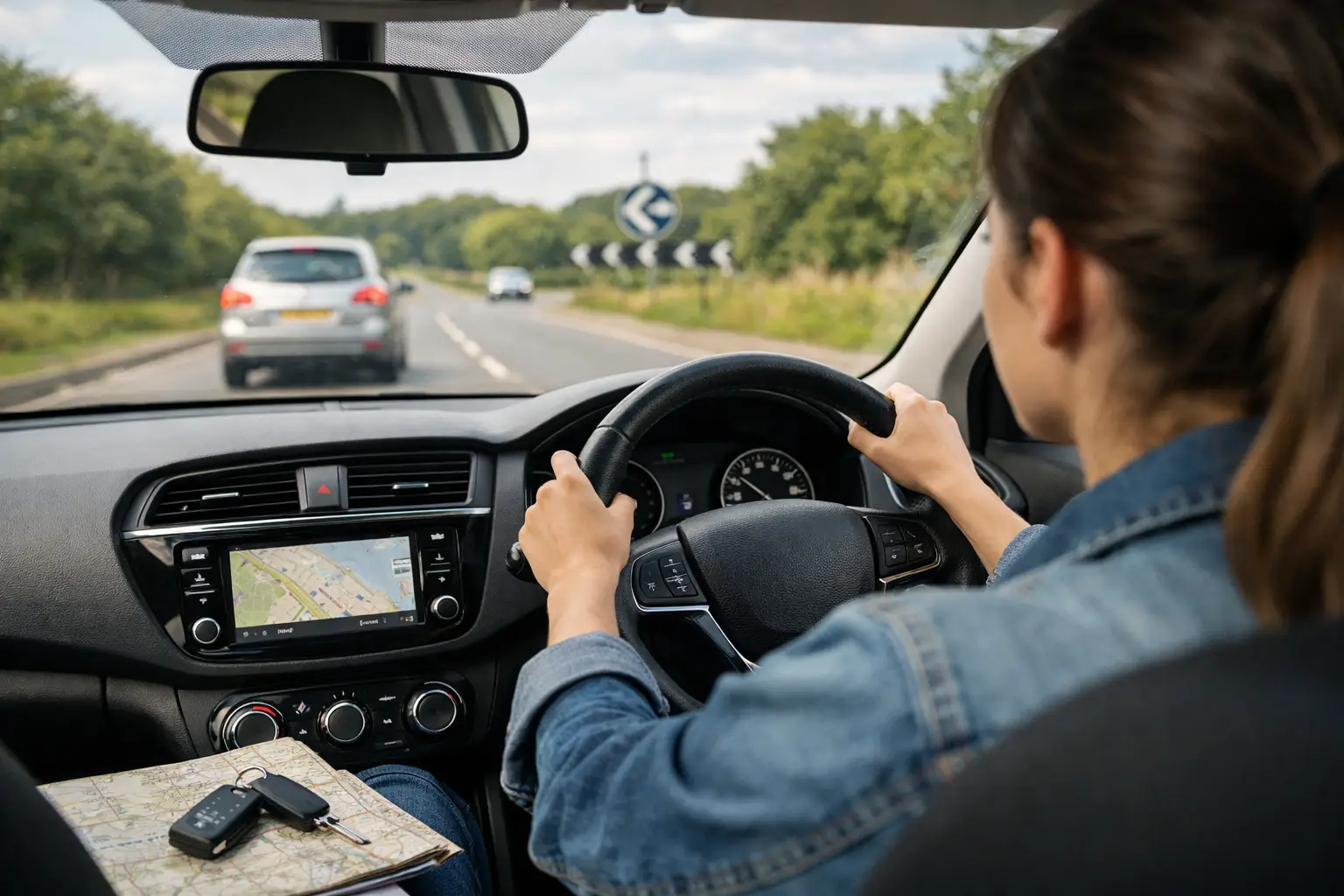
The first time you drive without your instructor talking you through every turn can feel oddly quiet. No helpful reminder about mirror checks, no calm voice saying, “Take the next road on the left,” and no safety net except your own judgement. That is exactly why learning how to prepare for independent driving matters. It is not just about passing a test. It is about being safe, calm and capable when it is only you, the car and whatever the road decides to throw at you.
For some learners, independent driving feels exciting. For others, it sounds like being thrown into the deep end with a sat nav and a prayer. Most people are somewhere in the middle. The good news is that confidence here is not magic. It is built through practice, planning and a bit of patience with yourself.
What independent driving really means
Independent driving is not about being perfect. It is about showing that you can make safe decisions without constant prompts. During a practical driving test, you will be expected to follow directions from a sat nav or traffic signs for around 20 minutes. In real life, it goes further than that. It means handling missed turnings, reading the road ahead and staying composed when things do not go neatly to plan.
That last part matters more than many learners realise. Anyone can drive well on a quiet road they know. Independent driving starts to show when a roundabout is busy, a pedestrian steps out near a junction, or the route is unfamiliar. The aim is not to drive quickly. It is to stay observant, make sensible decisions and recover calmly if something unexpected happens.
How to prepare for independent driving before your test
The best preparation starts before you are test-ready. If every lesson depends on your instructor giving step-by-step directions, you may be learning how to follow instructions rather than how to drive independently. A good instructor gradually gives you more responsibility, because that is how real confidence grows.
One of the simplest ways to prepare is to practise following directions without overthinking every mistake. If you go the wrong way safely, that is usually not a disaster. It is just a wrong turn. Learners often panic because they think a route error is a driving error. It is not. The examiner cares much more about whether you stay safe and legal than whether you take the prettiest path to the next roundabout.
It also helps to practise in different conditions. A learner who drives nicely on familiar roads in good weather may still feel unsettled in rain, in heavier traffic or on roads with tricky lane markings. Independent driving becomes easier when the road environment does not feel completely new.
Build decision-making, not just car control
Clutch control, steering and moving off are important, but independent driving relies heavily on judgement. You need to spot hazards early, choose your speed properly and give yourself enough time to react. That is where many learners improve the most in the final stretch before test day.
A useful habit is to talk yourself through what you can see while practising. Not out loud forever, unless you fancy giving your passengers a live road commentary, but enough to sharpen your awareness. Notice parked cars narrowing the road. Spot cyclists before you reach them. Read signs early. Ask yourself what might happen next.
This makes a real difference because independent drivers are not simply reacting to what is right in front of them. They are planning ahead. The earlier you notice something, the calmer your response tends to be.
Get comfortable with the sat nav and signs
Many learners worry about sat nav driving because they imagine it is full of traps. It is usually much simpler than that. The sat nav gives you clear instructions with plenty of warning, and if you miss a turning it will simply recalculate. It does not sigh dramatically or question your life choices.
Still, you should get used to listening and responding without rushing. Practise following spoken directions while keeping your eyes on the road rather than staring at the screen. The display is there to support you, not to hypnotise you.
Road signs matter too, especially if you are asked to follow them instead of the sat nav. This is where local practice can help. In places like Peterborough, you may meet a mix of dual carriageways, roundabouts and changing lane layouts that reward early planning. Learning to pick up signs calmly and position the car in good time will make independent driving feel far less hectic.
Manage nerves before they manage you
Nerves are normal. If you are worried about driving on your own, you are not weak and you are definitely not the only one. In fact, a small amount of nerves can sharpen your focus. The problem starts when anxiety turns every decision into a panic.
Preparation helps because it replaces vague fear with specific experience. If you have already practised independent routes, dealt with a missed turning and recovered from a stall without drama, your brain has evidence that you can cope.
It is also worth having a routine before driving. That might mean adjusting your seat and mirrors in the same order every time, taking one slow breath before moving off, and checking that you know the plan for the journey. Small routines create steadiness, and steadiness is gold when your nerves are trying to be theatrical.
Practise the bits learners often avoid
Most people have favourite roads and least favourite roads. Funny that. The road you avoid because it has a busy roundabout or awkward lane markings is usually the road that would teach you the most.
If you want to know how to prepare for independent driving properly, spend time on the situations that stretch you. That might be emerging at busier junctions, joining faster roads, dealing with spiral roundabouts or parking when people are waiting behind you. These are the moments that make learners tense, but they are also where real independence is built.
The trick is not to throw yourself into everything at once. Stretch yourself gradually. Repeat the same challenging situation enough times that it becomes familiar. Confidence is often just repetition with better thinking.
Know the difference between safe and hesitant
Many nervous learners assume that going slower, waiting longer and being extra cautious will always impress an examiner or keep them safer. Sometimes that is true. Sometimes it creates new problems.
Independent driving needs balance. You should be careful, but not so hesitant that you confuse other road users or miss obvious opportunities to proceed. Holding back too long at roundabouts, braking unnecessarily or creeping along well below the speed limit can suggest uncertainty rather than control.
This is one reason personalised tuition matters. Some learners need help becoming more cautious. Others need support trusting their own decisions. Good preparation is not one-size-fits-all, because the gap between your current habits and confident independent driving will be different from someone else’s.
Prepare for real life, not just the test route
Passing your test is brilliant, but it is not the finish line for learning. The first solo drive to work, college, the shops or your mate’s house can feel more nerve-racking than the test itself. There is no examiner beside you, but there is also no one to rescue your parking attempt.
That is why it helps to practise real-life journeys before you need them. Think about the routes you are likely to drive once you pass. If possible, build experience on similar roads and in similar traffic. Practise parking in ordinary car parks. Drive at different times of day. Learn what it feels like when the road is busy, not just when the lesson slot is quiet.
If you are choosing between manual and automatic, be honest about what supports your confidence best. Manual offers flexibility, but it also gives you more to manage at once. Automatic can free up mental space for observation and planning. Neither choice is morally superior. The right one depends on your goals, your comfort level and how you learn best.
Use feedback well
The learners who improve fastest are not always the naturally confident ones. They are often the ones who listen carefully, ask questions and work on one issue at a time. If your instructor says you need better lane discipline or earlier mirror checks, that is useful information, not a verdict on your driving ability.
Try to leave each lesson knowing what went well and what needs attention next. Progress feels much less overwhelming when it is specific. “I need to be better at independent driving” is too vague. “I need to read signs earlier on roundabouts” is something you can actually practise.
At D4Driving, that tailored approach is what helps learners move from relying on prompts to making their own safe decisions with confidence. It is not about rushing you through. It is about building the skills properly so you trust yourself when it counts.
Independent driving is really about proving something to yourself. Not that you will never make a wrong turn, stall the car or need a second attempt at parking, but that you can handle those moments calmly and keep going. That is the kind of confidence that lasts long after the L plates come off.