
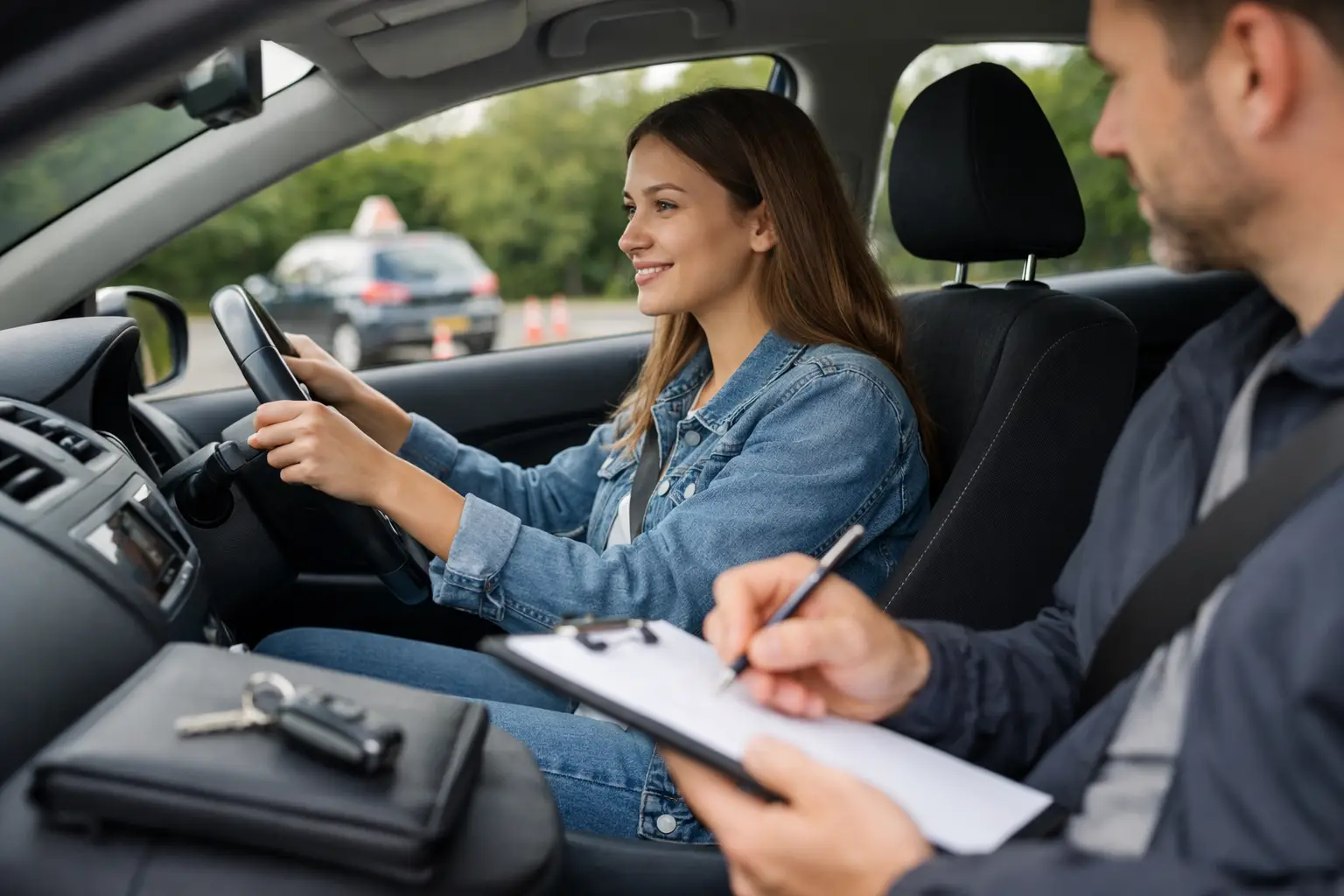
That first driving lesson can feel oddly dramatic. One minute you are holding a provisional licence and imagining freedom, the next you are wondering whether you are meant to know what every pedal does before you even turn the key. If you are searching for how to prepare for driving lessons, the good news is this: you do not need to arrive already confident, polished or somehow born knowing how roundabouts work.
What helps most is turning up ready to learn. Not ready to be perfect - ready to listen, ask questions and build good habits from the start. That is a much better foundation than pretending you are relaxed while gripping the seat like it owes you money.
How to prepare for driving lessons before day one
The practical side matters more than people think. Make sure your provisional licence is valid and with you, wear comfortable shoes with a thin sole, and bring glasses if you need them for distance vision. Avoid heavy boots, loose flip-flops or anything that makes it harder to feel the pedals properly. Your instructor can teach clutch control - they cannot do much about footwear that belongs on a beach.
It also helps to know the basics of what will happen in a lesson. You are not expected to drive off into town within two minutes. A good instructor will talk you through the cockpit drill, explain the controls clearly, and adjust the pace to your level. For some learners, that means starting in a quiet area and focusing on moving off and stopping. For others, especially if they have had lessons before, it may mean getting back into traffic sooner.
If you are choosing between manual and automatic, think honestly about your goals and confidence level. Manual gives you more to learn early on, but some people like that sense of control and flexibility. Automatic can feel less overwhelming, which suits nervous beginners or learners who want to focus more quickly on road awareness and decision-making. Neither choice is the "easy way out". It is simply about what fits you best.
Get your head ready, not just your paperwork
Most learners do not struggle because they lack effort. They struggle because nerves make everything feel bigger. A missed mirror check suddenly feels catastrophic. A slow hill start feels like public humiliation. In reality, early lessons are supposed to be messy. That is the point of lessons.
The best preparation is to lower the pressure before you begin. You are not going to be judged on whether you look natural behind the wheel in the first hour. You are there to learn a completely new skill with someone whose job is to guide you safely through it. Treat the first few lessons as a learning phase, not a performance.
If you tend to get anxious, tell your instructor. That is useful information, not an awkward confession. A patient instructor can adapt the pace, explain things in smaller steps and help you build confidence steadily instead of rushing ahead and hoping for the best.
What if you are an adult learner?
Adult learners often bring a different kind of pressure. Teenagers worry about stalling in front of their friends. Adults worry about looking silly, falling behind or taking longer than expected. The truth is that adult learners often do very well because they are focused, motivated and usually more aware of risk.
Where it can get harder is overthinking. If that sounds familiar, try to focus on one lesson at a time rather than the whole journey to the test. You do not need to become a finished driver this week. You just need to improve a little each session.
Learn a few basics in advance
You do not need to memorise the Highway Code cover to cover before your first lesson, but a little background knowledge can make everything feel less intimidating. Knowing the difference between the clutch and brake, what the mirrors are for, and why observations matter gives you a head start.
That said, there is a trade-off. Watching ten videos online can help, but it can also leave you with too many conflicting tips. Try not to turn preparation into a rabbit hole. A few reliable basics are useful. Turning up convinced you have invented a better way to steer is less useful.
If you have already started revising for your theory test, that can help your practical lessons too. Road signs, hazard awareness and rules of the road make more sense when you start seeing them in real traffic. The two parts of learning to drive support each other.
What to do the night before a lesson
Keep it simple. Get enough sleep, give yourself plenty of time the next day and avoid arriving flustered. If you have booked a longer lesson, eat beforehand so you are not trying to master junctions while distracted by the fact you skipped lunch.
It is also worth thinking about any questions you want to ask. Maybe you are unsure what to expect in your first hour. Maybe you want to know whether one-hour or two-hour lessons would suit you better. Maybe you are deciding between manual and automatic. Asking those questions early usually settles nerves faster than silently worrying about them.
Should you practise with family between lessons?
It depends on who is in the passenger seat.
Private practice can be brilliant if the supervising driver is calm, legal and consistent. Extra time on the road often helps learners improve more quickly because skills start to feel familiar. But if practice turns into mixed messages, panic instructions or long debates about whose method is "right", it can slow progress rather than help it.
If you do practise privately, keep it structured. Work on the same skills covered in your lesson and do not jump too far ahead. Confidence grows faster when practice feels manageable.
How to prepare for driving lessons so you learn faster
The learners who make steady progress are not always the quickest on day one. They are usually the ones who stay engaged. They ask why they made a mistake, they remember feedback, and they build from one lesson to the next instead of resetting emotionally every time something goes wrong.
A good habit is to take one minute at the end of each lesson to note what went well and what needs work. That might be something small like smoother gear changes or better mirror checks before turning. This gives you a clearer sense of progress, which matters because driving can sometimes feel harder before it feels easier.
Lesson length matters here too. One-hour lessons can suit busy schedules and help newer learners avoid overload. Longer sessions often give you more time to settle in, practise properly and finish on a stronger note. There is no universal best option. The right choice depends on your concentration, confidence and availability.
For learners in Peterborough and nearby areas, instructor-led planning makes a real difference because local routes, junction types and traffic conditions can be used in a way that matches your stage of learning. Good preparation is not just what you do before the lesson. It is also choosing lessons that are structured around how you actually learn.
Small things that make a big difference
Arrive a few minutes early if you can. Put your phone away. Wear something comfortable enough that you are not distracted by it. If you are unwell, exhausted or unusually stressed, mention it. That does not mean the lesson is wasted - it just helps your instructor adjust expectations and focus.
Try not to compare yourself with friends, siblings or that one person who claims they passed after twelve minutes of practice and a dream. Some people take to vehicle control quickly and need more work on planning ahead. Others are cautious at first and become excellent, safe drivers because they build strong habits early. Fast is not the same as good.
And if your first lesson feels tiring, that is normal. You are taking in new information, making decisions and coordinating movements all at once. Feeling mentally full afterwards is not a sign you are bad at driving. It is usually a sign you are learning.
The best mindset to bring with you
Come ready to improve, not impress. That single shift makes the whole process easier. You do not need to prove you belong in the driver’s seat before your lessons begin. You just need to show up, be open to coaching and give yourself room to learn at a realistic pace.
At D4Driving School of Motoring, that is exactly how progress is built - patiently, clearly and around the individual rather than a one-size-fits-all plan. Because the real goal is not just getting through a lesson. It is becoming a safe, confident driver who knows what to do and why.
If you are about to start, take a breath. Bring your licence, wear sensible shoes, and leave perfection at home. Confidence usually does not arrive before the first lesson - it grows because of it.