
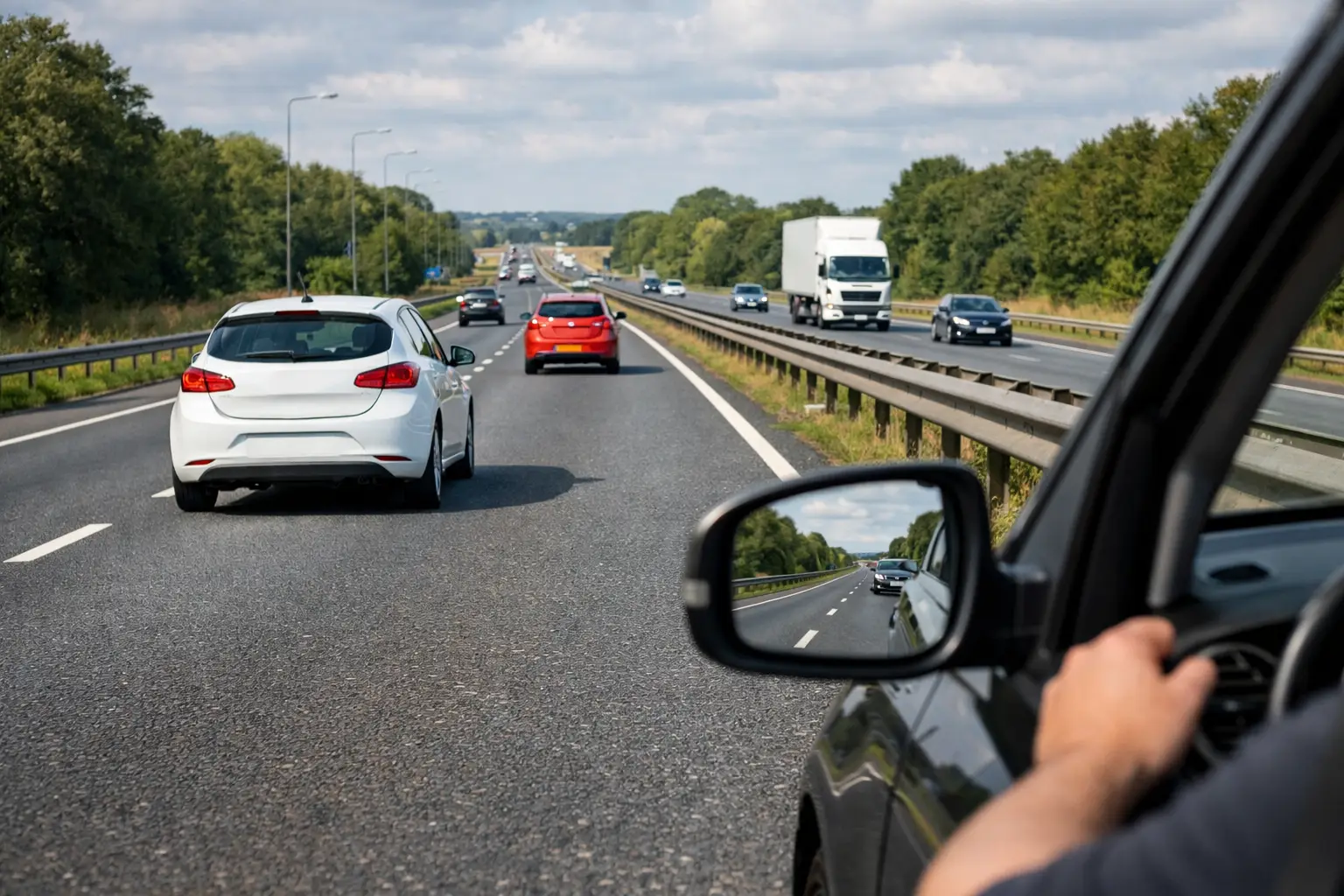
A dual carriageway can make a learner driver’s hands feel suddenly very small on the steering wheel. Traffic is quicker, gaps look shorter, and every sign seems to appear at once. The good news is that learning how to handle dual carriageways is not about being fearless or forcing your way into fast-moving traffic. It is about planning early, using good observation and giving yourself enough time to make calm decisions.
A dual carriageway is simply a road with a central reservation separating traffic travelling in opposite directions. It is not automatically a motorway, and it may include roundabouts, traffic lights, pedestrian crossings and different speed limits. Treat each one as its own road, read the signs and drive to the conditions rather than making assumptions.
Build confidence before you join
The biggest difference on a dual carriageway is the speed and volume of traffic. Before joining, make sure your basic routines feel steady: steering, changing gear if you are learning in a manual, using mirrors and responding to signs. If these actions still need lots of concentration, a busy dual carriageway can feel like trying to juggle while someone reads you a map.
Your view needs to stretch further ahead than it would in town. Look well beyond the car in front for brake lights, lane closures, signs and developing queues. Check your mirrors regularly too, especially before changing speed or position. This gives you more time to respond smoothly instead of reacting at the last second.
Speed limits matter, but the national speed limit is a maximum, not a target. For cars and motorcycles, the national speed limit on a dual carriageway is usually 70 mph unless signs say otherwise. Wet roads, reduced visibility, heavy traffic and unfamiliar routes may all mean that a lower speed is safer. You should always be able to stop safely within the distance you can see to be clear.
How to handle dual carriageways when joining
Most dual carriageway nerves begin on the slip road. Your job is to join the flow without making drivers already on the carriageway brake or swerve. Use the slip road to build an appropriate speed where it is safe to do so. Joining too slowly can make finding a gap harder, while racing down the slip road without observing is no better.
As you travel along the slip road, check the road ahead, your interior mirror and your right-hand mirror. Start looking for a usable space in the traffic rather than staring at one car and hoping it moves. A gap behind a vehicle is often easier to use than trying to pull in front of it.
If the end of the slip road has give-way markings, traffic on the main carriageway has priority. Indicate right if you need to move into the left-hand lane, but remember that an indicator communicates your intention - it does not create a gap. Adjust your speed gently to fit into a safe space. Do not expect another driver to move into the next lane for you, even if they appear to have room.
Occasionally, traffic is so busy that you may need to slow significantly or stop at the end of the slip road. It is not ideal, because pulling away into fast traffic takes more judgement, but it is better than joining without space. A calm pause is always safer than a rushed manoeuvre.
Keep left and make lane choices early
Once you have joined, settle into the left-hand lane when it is safe. On a dual carriageway, the right-hand lane is normally for overtaking or preparing to turn right. Staying in the right-hand lane when the left is clear is poor lane discipline and can create unnecessary pressure for everyone behind you.
Road markings and signs may tell you which lane to use for an upcoming junction or roundabout. Read them early. If you wait until the final few seconds to decide, you are more likely to make a sharp lane change, brake unnecessarily or miss your exit. Missing an exit is inconvenient. Making a sudden move across live traffic is dangerous.
When you need to change lanes, use a clear routine: check mirrors, signal if appropriate, check the blind spot, then move only if there is a safe gap. Keep the movement gradual and controlled. A quick glance over your shoulder is particularly useful before moving right, as a vehicle may be alongside but hidden from your mirrors.
Leave a generous following distance from the vehicle ahead. At higher speeds, a small gap disappears very quickly. In dry conditions, use at least the two-second rule: pick a fixed point the vehicle ahead passes, then count until you reach it. Double that gap on wet roads and allow even more room in poor weather.
Overtaking without rushing
Overtaking should have a purpose. If a slower vehicle is holding you up and the road ahead is clear enough, move into the right-hand lane, pass steadily, then return to the left when safe. You do not need to sit beside another vehicle for longer than necessary, but there is no prize for overtaking at maximum speed either.
Before moving out, check your mirrors and blind spot, assess the traffic behind and make sure the lane is clear ahead. Signal right, move smoothly and keep a safe distance from the vehicle you are passing. Once you can see the entire front of that vehicle in your interior mirror, check again and move back to the left when it is safe.
Avoid weaving between lanes to gain a few seconds. In slow, congested traffic, lanes can move at different speeds, and you may sometimes find yourself passing vehicles on the left while staying in your lane. What you should not do is repeatedly move left simply to undertake. Keep your decisions calm, legal and predictable.
Be especially patient around lorries. They need more room, take longer to build speed and have larger blind spots. Never sit alongside a lorry for longer than needed, and do not pull back in sharply after overtaking. Give professional drivers the space they need to do their job safely.
Leaving the dual carriageway safely
Exits are where planning pays off. Look for advance direction signs and the countdown marker boards on many slip roads. These usually show three, two and then one diagonal bar as you approach the exit. Use that warning to check which exit you need and begin preparing well before the turning point.
Move into the correct lane early when it is safe, check mirrors and signal left. Keep a steady speed on the main carriageway until you have entered the slip road. Braking heavily before the exit can surprise drivers behind you. Once you are on the slip road, reduce speed progressively and be ready for a tight bend, a roundabout or a give-way line.
If you realise too late that you need an exit, carry on and take the next safe route. Never reverse, stop or cut across lanes to rescue a missed turn. Sat navs can be wrong, signs can be missed and everyone takes the occasional scenic detour. The road will give you another opportunity.
Practise the route, not just the road
Confidence grows through repeated, well-planned practice. Start with quieter dual carriageways at less busy times, then build up to joining, overtaking and leaving in heavier traffic. A lesson can focus on one skill at a time, such as reading signs early or choosing safe gaps, before putting everything together on a longer drive.
For learner drivers in Peterborough, dual carriageway practice can be particularly useful before a test because it develops forward planning, speed awareness and independent decision-making. It also helps show that you can stay composed when the road feels faster and busier than your usual local routes.
At D4Driving School of Motoring, that progression should feel personal. Some learners need extra time on slip roads; others are ready to work on lane discipline and exit planning. Patient, focused practice turns a road that once felt intimidating into just another part of your journey towards driving freedom.
The next time you approach a dual carriageway, take a breath, look well ahead and give yourself time. Good driving is rarely about bold moves. It is about making the safe, sensible move early enough that it looks easy.