
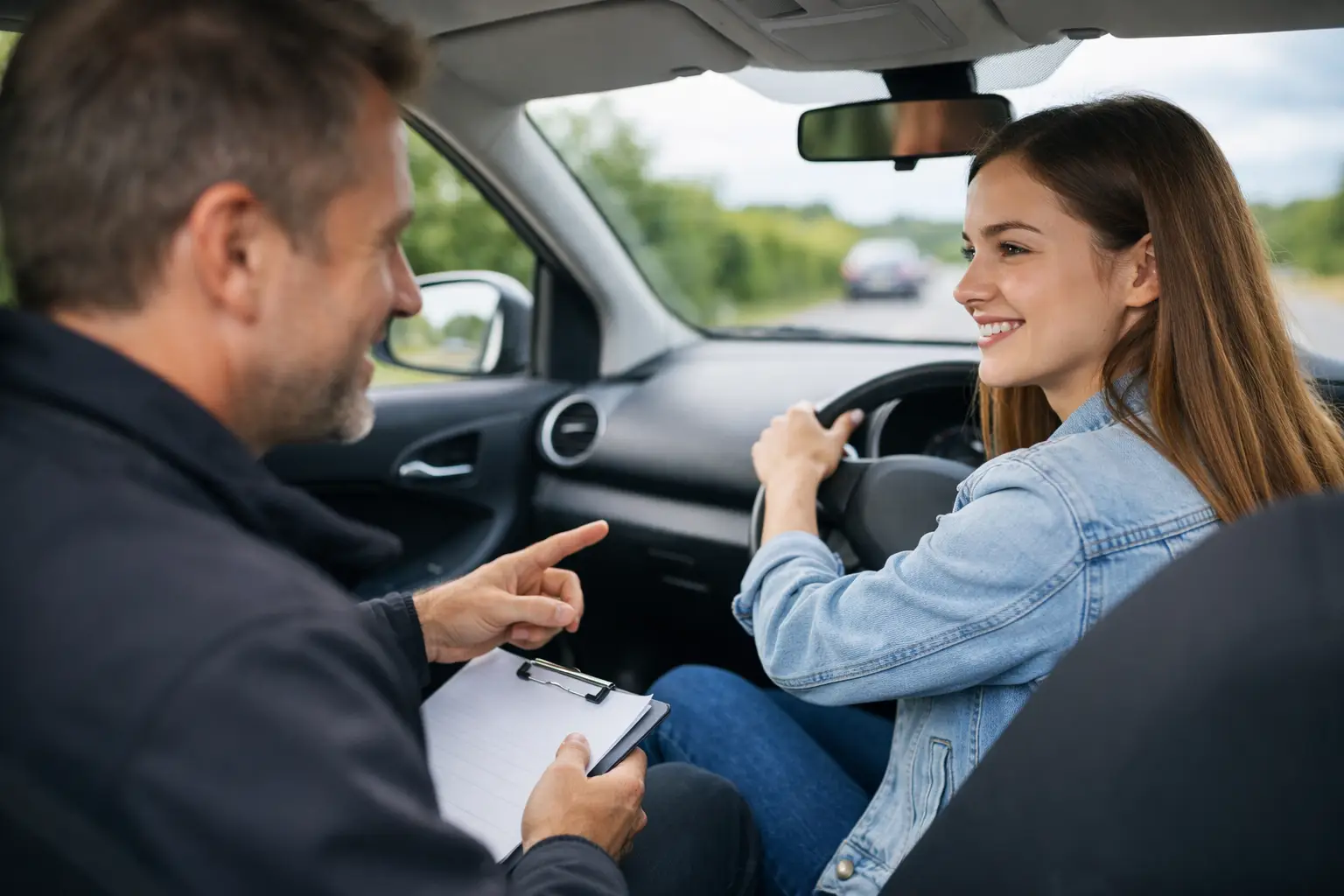
Some learners arrive for their first lesson excited and ready to go. Others grip the door handle like it has personally offended them. Both are normal. If you are looking for driving lessons Grantham learners can genuinely feel good about, the right fit is not just about getting through the test. It is about learning safely, building confidence at your own pace, and making steady progress without feeling rushed or talked down to.
That matters more than people think. A lesson can be the difference between finishing the hour feeling capable or feeling as though driving is only for other people. Good tuition should leave you clearer, calmer and a little more in control each time you get behind the wheel.
What makes driving lessons in Grantham worth your time?
The simple answer is personalisation. Not every learner starts in the same place, and not every learner needs the same lesson plan. Some need a gentle introduction to moving off, steering and clutch control. Some can already drive reasonably well but need focused support with roundabouts, bay parking or test routes. Others are returning to driving after years away and want their confidence back before they tackle busy roads alone.
That is why one-to-one tuition makes such a difference. You are not being squeezed into a fixed script. The lesson is shaped around what you can do now, what you find tricky, and what needs to happen next. Progress becomes much easier to measure when the teaching is built for you rather than for some imaginary average learner.
There is also the question of atmosphere. Learners tend to improve faster when they feel comfortable making mistakes. That does not mean standards drop. It means you get clear, honest feedback without the sighs, the panic, or the strange instructor habit of making a simple junction sound like the final lap of a Grand Prix.
Driving lessons Grantham learners often need
In Grantham, many learners are not looking for a dramatic sales pitch. They want straightforward, patient instruction and a proper sense of progress. For some, that means starting from scratch. For others, it means polishing up the skills that keep causing trouble in lessons or mock tests.
Manual and automatic lessons both have a place here, and the right choice depends on you. Manual can offer flexibility if you want to drive either type of car later on, but it can feel like a lot to manage early on when you are juggling clutch control, gears, mirrors and road position. Automatic can remove some of that pressure and help nervous learners focus sooner on observation, planning and hazard awareness. Neither option is the "easy way out". The best choice is the one that helps you learn well and drive safely.
Lesson length matters too. A one-hour lesson can work well for beginners who are still building concentration and confidence. Ninety-minute or two-hour lessons often suit learners who want more time to settle in, practise several topics, or prepare seriously for a test. There is no gold star for picking the longest session if it leaves you mentally fried. Good planning beats bravado every time.
The difference a tailored lesson plan makes
A tailored lesson plan sounds obvious, but not every learner gets one. Sometimes lessons drift. One week is manoeuvres, the next is random driving, and the week after that everyone pretends progress is happening because the car is still moving and nobody hit a bollard.
A proper plan gives structure without making the experience rigid. Early lessons might focus on basic controls, moving off safely, stopping under control and understanding simple junctions. As confidence grows, you can build into independent driving, dual carriageways, roundabouts, parking, rural roads and test-style decision making. If a certain area needs more work, the plan adjusts.
That flexibility matters for nervous learners in particular. Confidence is not built by being thrown into situations before you are ready. It is built by stretching your skills at the right pace, repeating key tasks until they feel manageable, and noticing real improvement. Often the biggest shift happens when a learner realises, "I could not do that three weeks ago, and now I can."
Learning for the test without becoming test-obsessed
Passing matters. Of course it does. But learners usually perform better on test when the training stays focused on safe, independent driving rather than memorising a script.
If you are taking a practical test in or around Grantham, targeted preparation helps. That means working on the kinds of roads, decisions and manoeuvres you are likely to face, while tightening up the habits that examiners notice - observation, speed choice, lane discipline, positioning and responding calmly when plans change. It also means dealing with the mental side of test day.
Many learners are not short on skill. They are short on belief. They second-guess themselves, rush because of nerves, or make one small mistake and mentally write off the rest of the drive. A good instructor helps with that too. The aim is not perfection. The aim is safe, consistent driving under normal road conditions.
Why patient teaching gets better results
Most people do not learn well when they feel judged. Driving is no different. If every mistake is treated like a disaster, nerves rise and concentration drops. Patient teaching creates the opposite effect. You stay receptive, you ask questions, and you learn how to correct problems rather than fear them.
This is especially important for adults returning to lessons, or younger learners who already feel under pressure from family, friends or social media. Comparing yourself to someone who passed quickly is rarely useful. Some learners click with roundabouts straight away and struggle with parking. Others are the reverse. Some need a few lessons to stop overthinking. Some need a few lessons just to stop apologising for everything.
The good news is that confidence is teachable. It grows through repetition, explanation and support. Not magic. Not pressure. Just steady work with an instructor who knows when to push and when to pause.
Choosing between manual and automatic in Grantham
If you are undecided, be honest about your goals. If you want the broadest licence option and you are comfortable learning more physical controls, manual may suit you. If you are anxious, have had previous lessons that felt overwhelming, or simply want to focus on road reading first, automatic may be the better route.
There is sometimes a bit of nonsense around this choice, as though one proves character and the other does not. Ignore that. The only thing that matters is whether your lessons help you become a safe, capable driver. A licence is useful when it gives you freedom, not when it wins an imaginary debate at the bus stop.
What to look for when booking driving lessons Grantham
Look for clarity. You should know whether lessons are manual or automatic, how long sessions are, and what kind of support you are actually getting. Transparent pricing matters because nobody enjoys mystery maths when they are already budgeting for learning to drive.
You should also expect a clear teaching approach. One-to-one tuition, patient guidance and structured progress are not small details. They affect how quickly you improve and how confident you feel between lessons. If you are preparing for test, it helps to choose instruction that can focus properly on driving test preparation rather than treating it as an afterthought.
A supportive instructor should still be honest. If you are test-ready, you should be told. If you are not yet there, you should be told that as well, along with what needs work and how to improve it. Encouragement works best when it is grounded in real progress.
For learners who want calm, tailored support, D4Driving School of Motoring offers dedicated driving test preparation in Grantham alongside manual and automatic tuition built around the individual, not a one-size-fits-all lesson plan.
Progress you can actually feel
The best lessons do not just fill time. They move you forward. You should come away understanding what went well, what needs more work, and what the next step is. Sometimes progress is obvious, like handling a roundabout independently for the first time. Sometimes it is quieter, like recovering from a mistake without panicking.
Both count. In fact, that second kind of progress is often what turns a nervous learner into a capable one. Real driving is not about never making an imperfect decision. It is about noticing, adapting and staying safe.
If you are thinking about starting, or starting again, give yourself permission to do it properly. Choose lessons that fit your level, your pace and your goals. A patient instructor, a clear plan and the right amount of challenge can change the whole experience. Before long, the roads that feel intimidating now can start to feel familiar - and that is when driving begins to feel less like a test and more like freedom.