
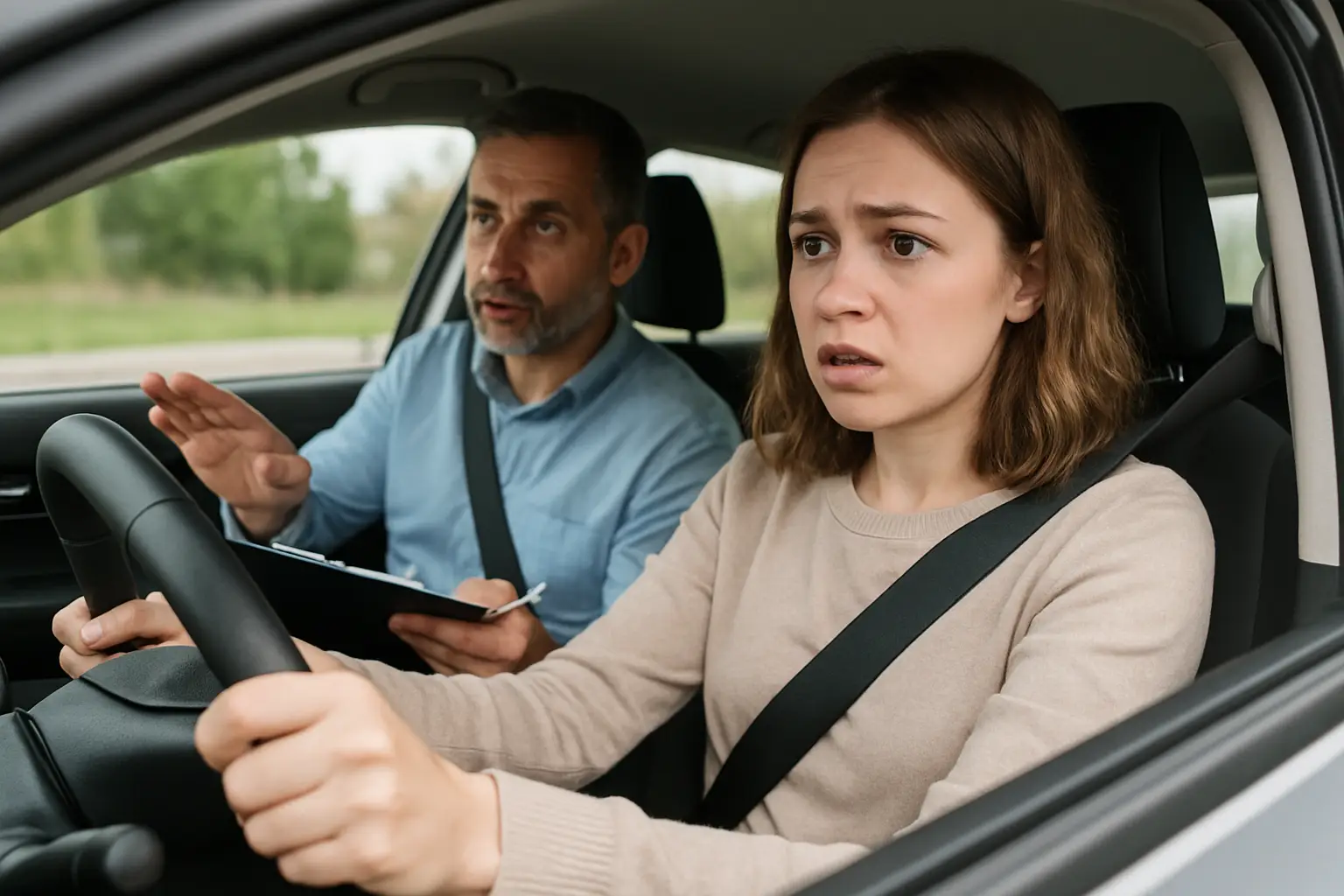
Your hands are on the wheel, the engine is running, and suddenly your brain is doing ten jobs at once: pedals, mirrors, gears, road signs, other cars, the instructor’s voice. If you feel tense before you’ve even moved off, you are not “bad at driving”. You are having a normal stress response to a new, high-responsibility skill.
Nervousness becomes a problem only when it stops you practising. The right driving lessons can turn that anxiety into steady confidence - not by pushing you harder, but by making the learning process feel predictable, safe, and genuinely manageable.
Why nervousness feels so intense in the driver’s seat
Driving asks for coordination, judgement and attention at the same time. When you are new, each part still needs conscious effort. That workload can trigger a fight-or-flight feeling: shallow breathing, tight shoulders, a racing mind, or the urge to stop the car and give up.
It also depends on what “nervous” means for you. Some learners worry about stalling and holding people up. Others fear roundabouts, dual carriageways, or making a mistake with someone watching. Adult learners often carry extra pressure - you may feel you should already be able to do this, or you might be returning to driving after a break and worrying your confidence has gone.
The good news is that confidence is mostly built, not found. You gain it through small wins that stack up over time.
Driving lessons for nervous drivers: what to look for
A calm, tailored approach makes the biggest difference. Nervous drivers do not need a louder voice or a faster pace - they need structure, patience, and a plan that adapts as they improve.
A lesson plan that starts where you are
If you are anxious, the early goal is not “cover lots”. The goal is to feel in control. That might mean spending time on cockpit drills, moving off and stopping smoothly, or practising quiet residential roads until your hands and feet stop feeling like they belong to someone else.
A personalised plan also avoids a common confidence killer: being thrown into busy situations before you are ready. That does not mean you avoid harder roads forever. It means you build up to them in a way that feels earned.
Clear explanations, not information overload
Nervous learners often try to remember every rule at once. A good instructor breaks things down and gives you one or two focus points at a time. You drive better when your mind is not crowded.
If you ever feel your head filling up, say so. “Can we keep it to one thing to work on this round?” is a sensible request, not a weakness.
A pace that still creates progress
There is a trade-off: going too gently can stall progress and keep anxiety alive. The right pace feels stretching but not overwhelming. You finish a lesson thinking, “That was hard, but I did it,” rather than, “I never want to do that again.”
That balance is especially important near test standard. Confidence grows when you can handle real traffic conditions, not just quiet streets.
Manual or automatic: which helps a nervous learner?
This depends on what triggers your anxiety.
If gears, clutch control and stalling are your main worry, automatic lessons can remove a big layer of pressure. You will still learn observations, positioning, speed control and decision-making - but with fewer moving parts to manage.
If you want maximum flexibility for future cars, or you already have access to a manual vehicle, learning manual may feel worth it. Many nervous drivers do well in manual once clutch control is taught calmly and progressively, with time to repeat the basics until they settle.
There is no “braver” choice. The best option is the one that helps you practise consistently and drive safely.
What a confidence-building first few lessons can look like
The first sessions should create familiarity. You might begin by learning how to set up your seat and mirrors properly, how to hold the wheel comfortably, and how to use the pedals smoothly. You will practise moving off, stopping, and steering with control.
Then comes joining and leaving the kerb safely, building observation habits, and learning how to judge space and speed. On quiet roads, you can take the time to feel what the car is doing without the pressure of fast traffic.
As soon as you are ready, you add slightly busier situations in short bursts. For example, you might do one or two simple junctions, then return to a calmer road to reset. That back-and-forth approach is often more effective than staying in a stressful area for an entire hour.
Simple techniques that reduce anxiety during lessons
You do not need a perfect mindset before you start. You just need a few tools you can use in the moment.
Use a “reset routine” at every stop
When you pull up, let that be a reset. Drop your shoulders, take one slow breath, and review only the next step (for example, “mirrors, signal, blind spot, move off”). Keeping your focus on the next action stops the mind from spiralling into “what if”.
Ask for a short pause when you need it
A professional instructor expects nervous learners to need breathing space. Pulling up safely for a minute is often the quickest way to prevent a wobble becoming a full panic.
Normalise mistakes as part of learning
The aim of lessons is not to prove you can already drive. The aim is to learn. Stalling, hesitating, or misjudging a gear is information, not failure. What matters is how you recover: secure the car, breathe, and try again.
Build a calm commentary
Quietly talking yourself through steps can help: “Mirrors… slowing… second gear… looking right… safe gap… going.” It keeps your attention on process rather than fear.
Roundabouts and busy roads: how to approach them without dread
Roundabouts are a common fear because they involve judgement, timing and other drivers’ behaviour. The way through is gradual exposure with clear rules.
Start with smaller, quieter roundabouts, even if they are not on test routes. Practise lane discipline and exit planning. Then progress to busier ones when you can consistently choose safe gaps and position correctly.
On dual carriageways, anxiety often comes from speed. A good stepping stone is practising joining from a slip road when traffic is lighter, learning how to match speed and create space. As your confidence improves, you can handle heavier traffic and learn how to stay calm when other drivers are impatient.
If you are learning around Peterborough, Kettering or Grantham, your instructor should be able to pick routes that build these skills progressively, including test-area driving when you are ready.
How long should lessons be if you’re nervous?
Shorter lessons can feel easier at first, but they sometimes end just as you are settling in. Longer lessons can give you time to warm up, repeat key skills, and finish on a confident note - but only if the pace is right.
A practical approach is to start with a time block that lets you get comfortable, then adjust. Many nervous learners do well with 1.5 hour sessions because there is room to practise without rushing, while still feeling achievable. If you know you fatigue quickly, an hour may be better to begin with. If you live a little farther out, or you want focused test preparation, two hours can be very effective once your stamina improves.
Preparing for your driving test without spiralling
Test nerves are normal. What helps is making your preparation measurable.
Your instructor should be able to tell you what “test-ready” means in specific terms: consistent observations, safe speed choice, good positioning, and independent decision-making. Mock tests can help, but only if they are used as learning tools rather than judgement days. For nervous drivers, the best mock tests include planned pauses to debrief and reset, so anxiety does not snowball.
Also remember: it is better to take the test when you are genuinely ready than to rush because of a date on the calendar. Moving your test can feel disappointing, but failing often hits confidence harder.
Choosing an instructor you can genuinely relax with
You are allowed to be picky. Chemistry matters when you are anxious.
Listen to how the instructor speaks to you. Do you feel rushed, talked over, or judged? Or do you feel guided? A calm instructor will give you clear direction, praise specific improvements, and correct mistakes without making you feel small.
If you want an instructor-led, personalised approach in the Peterborough area, D4Driving School of Motoring offers one-to-one manual and automatic lessons in clear time blocks, with structured test preparation sessions also available in Kettering and Grantham.
A closing thought to take into your next lesson
Confidence is not the absence of nerves. It is knowing what to do next, even when you feel them. If you keep showing up, practising in the right order, and letting progress be gradual, your body stops treating driving like a threat - and starts treating it like a skill you own.