
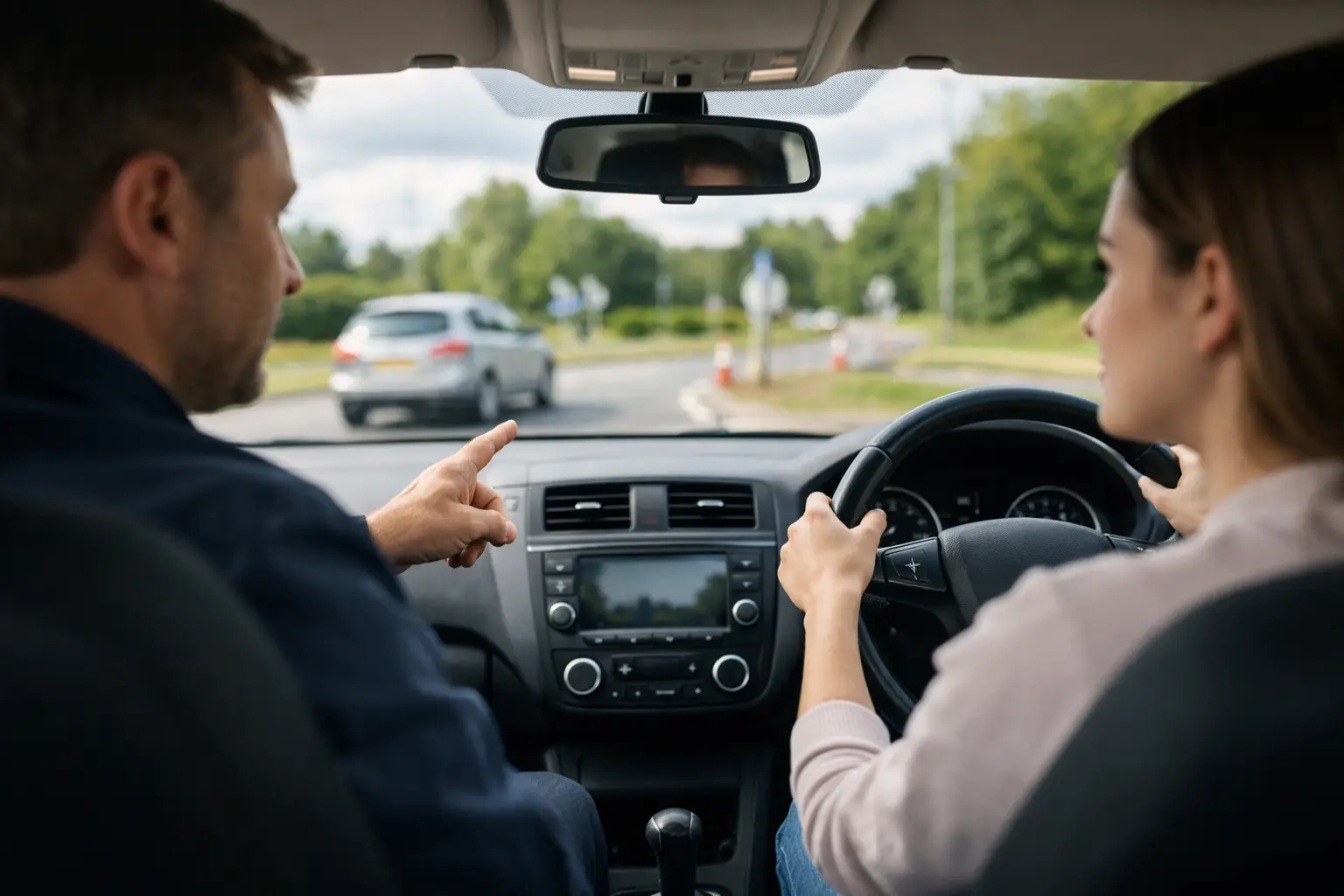
You can tell when an hour has flown by in a driving lesson. You have just settled into the car, stopped overthinking the clutch or the mirrors, and suddenly it is time to pull over. That is why so many learners ask the same question: do longer lessons help learners make better progress, or do they simply leave you tired and fed up?
The honest answer is that longer lessons can help a lot, but not for every learner, not at every stage, and not for every goal. Lesson length works best when it matches how you learn, what you are practising, and how confident you feel behind the wheel. More time is useful. Better use of time is what really moves things along.
Do longer lessons help learners in real driving lessons?
In many cases, yes. A longer lesson gives you more time to settle in, build rhythm, and practise a skill properly instead of only getting a quick taste of it. That matters because driving is not just about understanding what to do. It is about repeating it until your hands, feet and eyes start working together without a running commentary in your head.
For a complete beginner, though, longer is not always better straight away. Early lessons can feel mentally full-on. You are listening, steering, judging speed, checking mirrors and trying not to stall while your brain politely asks for a lie-down. In that situation, a shorter lesson can actually lead to better learning because you finish before your concentration drops.
Once the basics are in place, longer sessions often become more useful. You can cover different road types, tackle roundabouts without rushing, and correct mistakes while the situation is still fresh. Instead of spending half the lesson warming up, you get meaningful practice time.
Why longer lessons often speed up progress
One of the biggest benefits of a 90-minute or 2-hour lesson is momentum. In a 1-hour slot, part of the session naturally goes on settling in, discussing what happened last time, and travelling to the area where a skill is best practised. A longer lesson gives that set-up time more value because there is more proper driving practice afterwards.
There is also more room for recovery. If the first attempt at a parallel park goes badly, that is normal. In a longer lesson, there is time to talk through it, try again, and often get it right before you finish. That does wonders for confidence. Ending a lesson on improvement feels very different from ending it halfway through a wobble.
Longer lessons are especially helpful for:
- practising independent driving
- working on test routes or unfamiliar roads
- combining manoeuvres with general road awareness
- building stamina for the practical test
That last point is often overlooked. A driving test is not just about skill. It is also about staying calm, focused and consistent from start to finish. Longer lessons help you get used to thinking clearly for more than a quick burst.
When longer lessons do not help learners
There is a limit to how much new information anyone can take in at once. If a learner is very nervous, easily overwhelmed, or still getting used to the basic controls, a long session can become too much. Once concentration dips, mistakes increase, and confidence can take a knock.
That does not mean the learner is bad at driving. It simply means the lesson length is wrong for that stage. Good tuition is not about squeezing the most minutes into a diary. It is about choosing the session length that lets you learn safely and steadily.
Some learners also start to switch off after too long on one topic. If a full lesson becomes ten versions of the same mistake with rising frustration, that is not productive. A shorter session with a clear goal can be far more effective than a longer one that drifts.
The best lesson length depends on where you are now
A beginner learning to move off, stop smoothly and approach simple junctions may do very well in a 1-hour lesson. It keeps things manageable. You can absorb the basics, ask questions, and leave feeling stretched but not scrambled.
For learners at an improving stage, 1.5 hours is often a sweet spot. There is enough time to work on a skill in context, drive on a mix of roads, and reflect without the lesson feeling too heavy. It gives your instructor space to coach properly rather than rush from one point to the next.
A 2-hour lesson can be excellent for more established learners, especially those preparing for the test. It allows time for mock test work, busier roads, dual carriageways, manoeuvres and independent driving in one session. It can also make practical sense if you want fewer weekly sessions but more depth each time.
That is why there is no magic answer to do longer lessons help learners. They help when the lesson is long enough to create flow, but not so long that focus disappears.
Automatic or manual can change the answer
If you are learning in an automatic, you may find that longer lessons become comfortable sooner. With no clutch control or gear changes to manage, some of the early mental load is reduced. That can make a 90-minute lesson feel very productive even from the beginning.
In a manual, especially for nervous beginners, there is often more to process at first. Longer lessons can still be useful, but they need careful pacing. A patient instructor will know when to push on and when to simplify things so you do not spend two hours wrestling with the same roundabout and questioning all your life choices.
Quality of instruction matters more than the clock
A longer lesson with poor structure is still a poor lesson. What really helps is teaching that is planned around you. The best lessons have a clear aim, enough repetition to build skill, and time to review what went well and what needs more work.
That is why personalised teaching matters so much. One learner may need a calm 1-hour session to build confidence at junctions. Another may benefit from a focused 2-hour block covering mock test conditions and last-minute weak spots. The right lesson length is not chosen by habit. It is chosen by progress.
At D4Driving School of Motoring, that is exactly the point. Lessons are not stretched for the sake of it. They are matched to the learner, the stage they are at, and the result they want - whether that is mastering the basics, getting comfortable in traffic, or sharpening up for test day.
How to tell if you need longer lessons
A few signs usually make the answer clearer. If you feel you only just get going before the lesson ends, a longer session may help. If you keep needing extra time to revisit the same area because travel or warm-up takes a chunk out of the lesson, longer sessions can be more efficient.
If you regularly finish tired, overloaded or irritable, you may need shorter sessions or a different pace within the lesson. Learning to drive should challenge you, yes, but it should not feel like a weekly endurance event.
It also helps to think about your schedule. Some learners make better progress with one longer lesson a week because it allows deeper practice. Others benefit more from shorter, more frequent sessions that keep skills fresh. There is no badge for choosing the longest lesson. The aim is steady, measurable improvement.
A smart approach beats a long one
The best progress usually comes from matching lesson length to the job. Use shorter lessons when you are building confidence, learning a new control skill, or managing nerves. Use longer lessons when you need continuity, realistic road experience, or proper test preparation.
If you are not sure, ask your instructor what they are seeing. A good instructor will tell you honestly whether more time would help or whether a sharper, shorter lesson would suit you better. That is a far better strategy than guessing.
Driving lessons are not a test of how long you can sit in the driver’s seat. They are about building skill, safety and confidence in a way that sticks. If a longer lesson gives you time to settle, improve and leave feeling stronger, it is doing its job. If not, there is nothing wrong with keeping it shorter and building from there.
The right lesson length is the one that helps you finish thinking, I can do this - and mean it.