
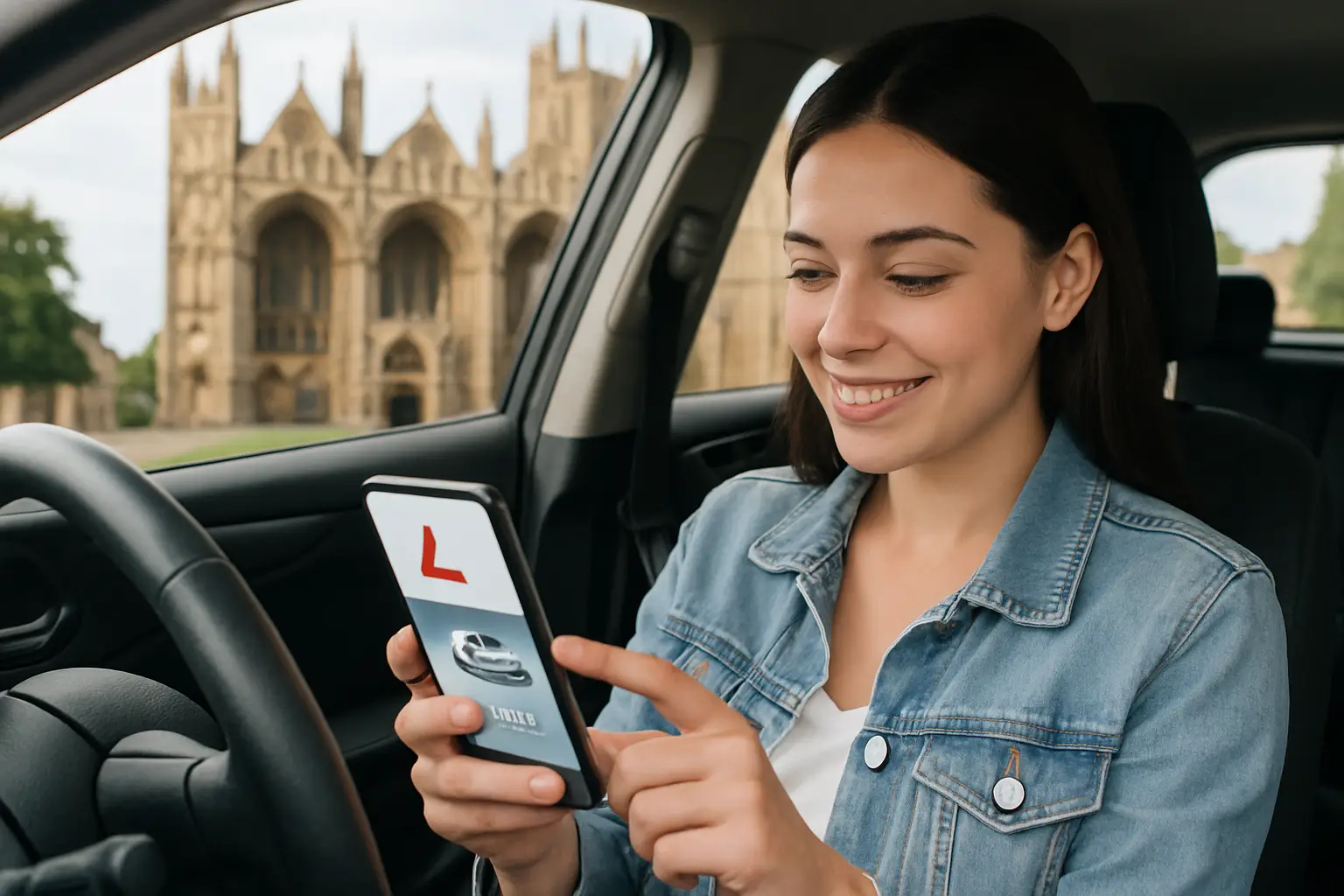
That moment you decide to learn to drive is usually followed by a less exciting one - trying to find lesson slots that fit around college, work, childcare, or shift patterns. If you have ever messaged three instructors, waited days for a reply, then found the only available time is mid-morning on a Tuesday, you will understand why so many learners now prefer to book online.
When you book driving lessons online Peterborough, you are really doing two things at once. You are securing time in the diary, yes, but you are also choosing the kind of learning experience you want: calm and confidence-building, or rushed and random. Online booking can make the admin quicker, but the quality comes down to what happens in the car - how well the lessons are structured, how clearly progress is tracked, and whether the teaching matches how you learn.
Booking online: what you gain (and what you still need to check)
Online booking is popular because it removes the back-and-forth. You can see what is available, choose the lesson length, and get started without chasing. For nervous beginners, that simplicity matters - it keeps the first step small and manageable.
The trade-off is that convenience can hide important details. A quick booking form does not automatically mean you will get a plan that suits your confidence level, nor does it guarantee you will practise the areas most likely to come up on your test. The best approach is to use online booking for speed, then make sure the instructor-led plan is personalised from lesson one.
What to decide before you book driving lessons online Peterborough
Most learners delay booking because they think they need everything sorted first. In reality, you only need a few clear decisions - and even those can be refined after your first session.
Manual or automatic: it depends on your goals
Manual gives you the widest choice of cars after you pass, and it suits learners who like feeling in control of the clutch and gears. Automatic can reduce workload early on, which helps if you are anxious, juggling lots of responsibilities, or simply want to focus on observations and decision-making first.
There is no “better” option. The best option is the one that helps you progress steadily and safely. If you are unsure, think about how you cope with multi-tasking under pressure. If you already feel tense at the thought of junctions and roundabouts, removing gear changes may help you build confidence faster.
Lesson length: choose the block that matches your concentration
Most schools offer time blocks because it keeps things clear and fair. A one-hour lesson can be ideal when you are fitting practice around a busy week or building a brand-new skill in small, repeatable steps.
A 1.5 hour lesson often feels like the sweet spot for learners who want enough time to settle, practise, and finish with a clear achievement. Two-hour lessons can work brilliantly for test preparation, longer routes, or when you want fewer sessions but deeper practice each time. The only downside is fatigue - if your focus drops after 75 minutes, two hours might become counterproductive unless breaks and pacing are built in.
Your start point: beginner, part-trained, or test-ready
Be honest about where you are.
If you are a complete beginner, your first priority is calm control and safe routines, not speed. If you are part-trained, you may need a reset on habits, observations, and consistency. If you are close to test standard, you will get the most value from focused mock-test style drives, route familiarity, and sharpening judgement.
When online booking asks for notes, use them. A short line like “nervous at roundabouts” or “stalled a lot previously” helps your instructor plan the first lesson properly.
What a personalised lesson plan should feel like
A good online booking experience gets you into the car. A good instructor-led experience keeps you moving forward in measurable steps.
From your early lessons, you should feel a clear structure: what you are working on today, what “good” looks like, and what you will practise next time. That structure is not rigid. It flexes around your learning style.
Some learners improve with simple repetition and calm prompts. Others do best with short explanations, then plenty of practice time. Nervous learners often need slower exposure - building confidence in quiet areas before gradually adding complexity. The key is that you do not feel judged for being cautious. You feel coached.
Progress should also be visible. You should leave the lesson knowing one or two things you did better than last time, plus one clear focus for independent practice (even if that practice is mental - such as talking through the routine for approaching a roundabout).
How to choose an instructor when booking online
Price matters, but it is rarely the full story. The cheapest lesson that leaves you confused or tense can cost more in the long run if it slows your progress.
When you are comparing options, look for clarity first. Are the lesson lengths and prices in pounds sterling easy to understand? Is there a straightforward “Book Now” flow? Are manual and automatic clearly offered? Clear information usually reflects clear teaching.
Next, look for signs of patience and learner-first coaching. Testimonials that mention feeling calmer, gaining confidence, and being guided step-by-step are often more meaningful than generic “passed first time” claims. Passing quickly is great, but passing safely, with real confidence, is what keeps you comfortable on the road afterwards.
Finally, make sure your instructor is an Approved Driving Instructor and that they focus on one-to-one tuition. Learning to drive is personal. You want feedback that is about you - your timing, your observations, your decision-making - not a one-size-fits-all script.
What happens after you book: setting expectations for lesson one
Learners often worry that the first lesson is a test. It is not. It is a starting point.
A professional first session usually includes a quick chat about your experience, your confidence level, and what you want to achieve. If you are brand new, you can expect the basics done properly: cockpit drill, moving off and stopping safely, steering control, and early routines for observation and mirrors.
If you have driven before, your instructor may spend time checking foundations such as mirror checks, positioning, and how you approach hazards. This is not to catch you out. It is to spot the quickest wins - the small changes that make everything else easier.
You should also feel that the lesson pace matches your nerves. You can be pushed gently without being overwhelmed. If you are anxious, it is completely reasonable to start in quieter roads and build up.
Booking online for test preparation: make it purposeful
If your test is coming up, online booking can help you lock in regular sessions. The difference between “some practice” and “test-ready practice” is focus.
Test preparation should include mock tests, but not back-to-back pressure drives that leave you drained. The most useful mocks include short pauses to clarify what happened and how to fix it next time. You want to practise the most common fault patterns: hesitation, missing mirror checks, late lane changes, and rushed judgement at roundabouts.
It also helps to train in the places that create real pressure in Peterborough: busier multi-lane roundabouts, higher-speed approaches, and the kind of junctions where planning matters more than quick reactions. The aim is not to memorise a route. It is to build the skill of reading the road so you can adapt on the day.
If you are booking in Peterborough but taking a test elsewhere, make sure your sessions reflect that. Dedicated driving test preparation is often offered for centres such as Kettering and Grantham, and your practice should match the local road types and the junction styles you will face.
Common worries that stop people booking - and the honest answer
Some learners hold back because they worry they will be “bad at driving”. That is normal. Driving is a skill, not a personality trait.
Others worry about being judged for nerves or for taking longer than friends. Learning speed varies hugely. What matters is steady progress and safe decision-making. A patient instructor will never rush you into traffic you are not ready for.
There is also the practical worry: “What if I can only do evenings or weekends?” Availability can be tighter at peak times, which is exactly why online booking helps. Securing your slot early usually gives you more control, especially if you want consistent weekly lessons.
A simple way to book with confidence
If you want a calm, structured start, choose a lesson block you can commit to regularly, decide manual or automatic based on how you learn, and share one or two notes about your experience when you book.
If you are looking for one-to-one tuition in Peterborough with clear lesson blocks and a personalised plan, D4Driving School of Motoring offers manual and automatic lessons with a straightforward booking flow at https://Www.d4driving.co.uk.
Driving confidence is built the same way every time - one calm decision, one well-taught lesson, then the next step when you are ready.