
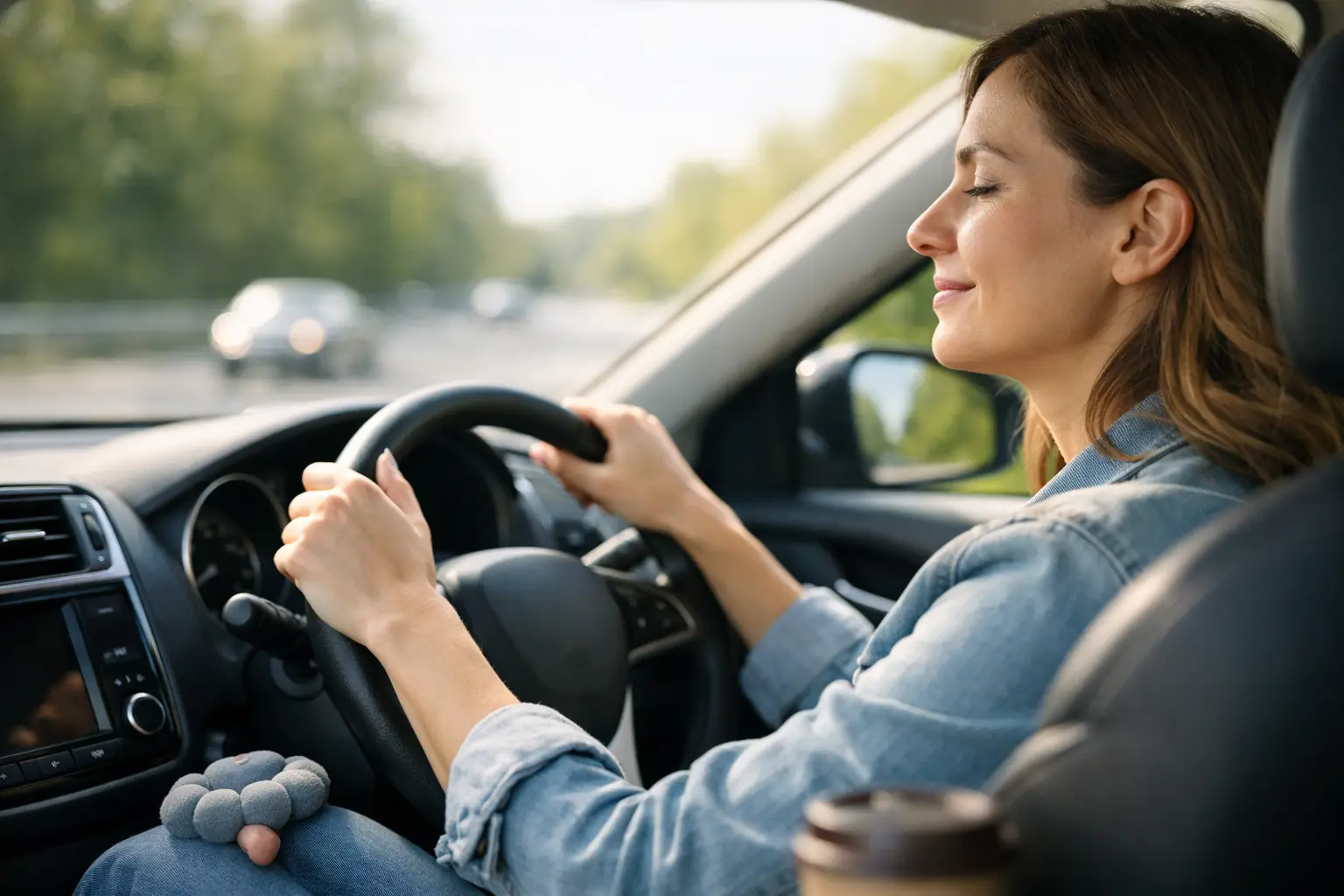
That moment when the engine is on, your hands are on the wheel, and suddenly every roundabout in Britain feels personally designed to test you - yes, that one. If you are looking for the best ways to stay calm driving, the good news is that feeling nervous does not mean you are a bad driver. It usually means you care, you are still learning, or you have had a wobble and do not want a repeat performance.
A lot of learners assume calm drivers are simply born that way. They are not. Most calm drivers have just built habits that stop nerves from taking over. That matters, because anxiety behind the wheel can make simple things feel far harder than they really are. You hesitate longer, overthink mirrors and signals, and convince yourself everyone else on the road knows exactly what they are doing. Spoiler: plenty do not.
The best ways to stay calm driving start before you move
Calm driving does not begin at the first junction. It starts before you even set off. If you rush to the car, feel flustered, and start driving while your brain is still catching up, you are giving yourself a harder job.
Give yourself a minute. Adjust the seat properly, sort the mirrors, check you are comfortable with the pedals, and take one steady breath before starting the engine. It sounds basic because it is basic, but basics are where confidence lives. When your position feels right and the car feels familiar, your brain has fewer things to worry about.
It also helps to know what sort of drive you are about to do. A short route through quiet roads feels different from town-centre traffic at a busy time. If you know a route is likely to be trickier, that is not a reason to panic. It is simply a reason to prepare a little better.
Stop aiming for perfect
This is one of the biggest causes of driving nerves, especially for learners and people coming back to driving after a break. They think staying calm means making no mistakes. In reality, trying to be perfect is often what creates the panic.
You do not need a flawless drive. You need a safe one. There is a big difference.
If you stall, miss a turning, need an extra moment at a roundabout, or realise your parking was not your finest work, nothing terrible has happened. Safe drivers recover. Panicked drivers turn a small mistake into three more because they are too busy replaying the first one.
A useful habit is to treat each moment separately. If the last junction was messy, leave it there. The next decision is the one that matters now.
What to say to yourself when you make a mistake
Your inner voice has a surprisingly big effect on how you drive. If your running commentary sounds like, "I am useless", "Everyone is judging me", or "I always mess this up", your body will respond as if there is a real threat.
Try something more practical instead. "Reset." "Slow it down." "Mirrors, signal, position." "I have time." These phrases are not magical, but they are useful because they direct your attention back to the job.
Good coaching is often calm, clear and slightly repetitive. Your self-talk should be too.
Breathing works - when you do it at the right time
People often hear "just breathe" and want to roll their eyes. Fair enough. But breathing can help if you use it properly.
The best time is not when you are already in full panic mode at a busy crossroads. It is before that, when you first notice your shoulders tightening or your grip on the wheel becoming a vice-like clamp.
Take one slow breath in through the nose, then a longer breath out. Focus on the longer exhale. That longer out-breath helps settle the body. You do not need to turn it into a meditation session in a right-turn lane. One or two steady breaths can be enough to lower the tension and stop it building.
If you are on a lesson, say that you need a second. If you are driving independently and it is safe, pull over somewhere appropriate, reset, and continue when you feel ready. There is no prize for pushing through while completely overwhelmed.
Make the road feel more predictable
A nervous brain hates surprises. One of the best ways to stay calm driving is to make as much as possible feel predictable.
This means planning earlier than you think you need to. Look well ahead, not just at the car in front. Check signs in good time. Think about which lane you need before the last possible second. If you know a roundabout or dual carriageway usually raises your heart rate, talk yourself through it before you reach it.
Predictability also comes from routine. The more often you use the same simple system, the less mental effort each drive takes. Mirrors, signal, position, speed, look. Or whatever sequence your instructor has taught you. Systems are calming because they stop you trying to invent the answer under pressure.
Why rushing makes everything worse
When learners feel nervous, they often try to get manoeuvres or decisions over with quickly. Quick lane changes, rushed clutch control, snatched observations - all because slowing down feels awkward.
But calm drivers are rarely the fastest to act. They are the ones who give themselves space to think. A steady approach into a junction, a pause to observe properly, and smooth control of the car usually feel far better than trying to hurry and then correcting halfway through.
You are allowed to take a sensible amount of time. That is not holding everyone up. That is driving with judgement.
Choose practice that builds confidence, not dread
Not every drive needs to be your personal Mount Everest. Yes, progress matters. But confidence tends to grow best when challenge is stretched, not dumped on you all at once.
If a certain type of road unsettles you, practise it in stages. A quieter time of day may be better before tackling peak traffic. A simpler roundabout may be the right starting point before moving to a larger one. Automatic may help some learners focus on road awareness before adding gear changes, while others prefer learning in a manual from the start. It depends on what is making you tense.
This is where tailored instruction makes a real difference. A good instructor will know when to push, when to pause, and when to break a problem down into smaller parts so it stops feeling like one giant monster with road markings.
Keep your body calmer so your mind follows
Driving anxiety is not only in your head. It shows up physically first for many people. Tight jaw, raised shoulders, locked elbows, shallow breathing, sore hands from gripping the wheel too hard.
A quick body check helps. Drop your shoulders. Loosen your fingers on the wheel. Rest your tongue away from the roof of your mouth. It sounds oddly specific, but tension hides in strange places.
Comfort matters too. If you are too hot, hungry, tired, or rushing between a dozen other things, you will be less patient with yourself. Not every anxious drive has a deep psychological cause. Sometimes you simply need water, food, and a bit less chaos beforehand.
If traffic or other drivers wind you up, narrow your focus
Heavy traffic, impatient tailgaters, and drivers who seem to believe indicators are an optional extra can all make you feel under pressure. The trick is not to absorb every bit of that pressure as if it belongs to you.
Bring your attention back to what you control - your speed, your space, your observations, your decisions. Someone behind you may be in a terrible mood. Unfortunate for them. It does not mean you should rush a turn, pull out unsafely, or abandon your judgement.
There is a difference between being aware of other road users and being emotionally dragged around by them. Calm driving gets easier when you stop treating every horn, overtake or glare as a personal review of your performance.
Test nerves need a slightly different approach
If your anxiety spikes most around the driving test, that is completely normal. The pressure feels different because you know you are being assessed. But the best response is still the same one: make the familiar feel familiar.
Do not cram loads of last-minute advice into your head the night before. That usually adds clutter, not confidence. Focus on the routines you already know. Eat something, leave enough time, and expect to feel nervous rather than waiting for a magical state of complete calm that may never arrive.
You can pass while nervous. Many people do. The aim is not to feel like a zen driving monk. The aim is to stay settled enough to make safe decisions.
For learners in Peterborough and those taking dedicated test preparation sessions in Kettering or Grantham, practising around likely test conditions with patient, one-to-one guidance often helps take the sting out of the unknown. Familiar roads do not guarantee an easy test, but they can reduce the mental load.
Progress is usually quieter than people expect
Confidence behind the wheel often arrives in small, almost boring ways. You notice you recovered from a stall without panicking. A roundabout that once made your stomach flip now feels manageable. You drive home and realise you were concentrating, not catastrophising.
That is progress. Not dramatic. Just solid.
If driving still makes you anxious, do not write yourself off. Most people who become calm drivers were not calm at the beginning. They got there through practice, patient coaching, and learning how to reset instead of spiralling. If you need that kind of support, D4Driving School of Motoring is built around exactly that idea - personalised teaching, steady progress, and helping nervous learners become confident ones.
The goal is not to be fearless every time you get in the car. It is to trust that even when you feel nervous, you know how to steady yourself and keep going.