
Automatic lessons vs manual lessons Peterborough learners ask about most
If you are about to book your first lesson, one question usually comes up before anything else - should you learn in an automatic or a manual car?
For many learners in Peterborough, this is not really about the gearbox. It is about confidence, cost, how quickly you want to progress, and what kind of driving life you expect to have after you pass. Some people want the broadest licence options possible. Others want a calmer start and a quicker route to feeling safe on the road.
There is no single right answer for everyone. The better question is which type of lesson gives you the strongest chance of learning well, building confidence steadily, and passing when you are genuinely ready.
What is the real difference between automatic and manual lessons?
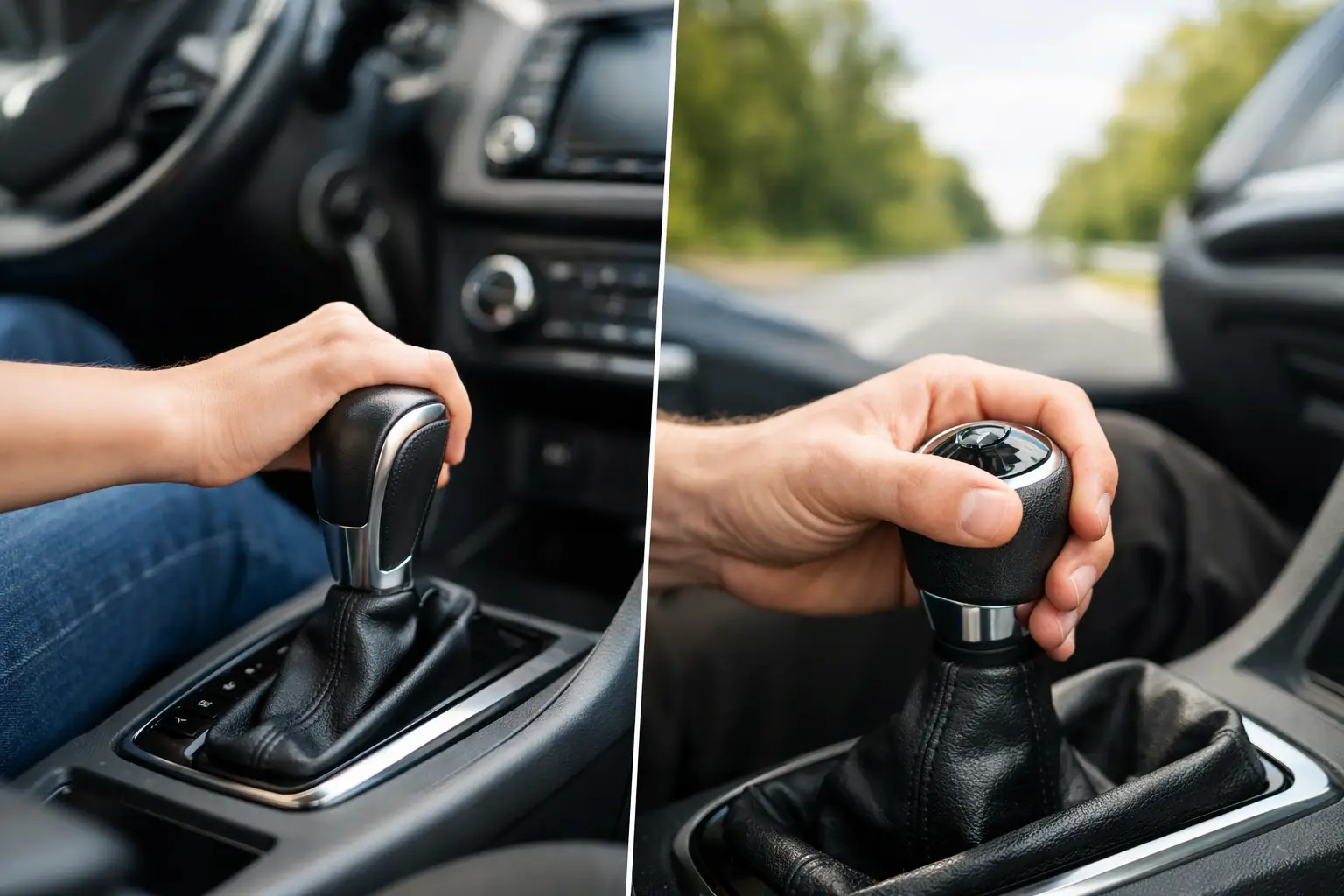
The technical difference is simple. In a manual car, you learn clutch control and gear changes alongside steering, road positioning, observations and decision-making. In an automatic, the car changes gear for you, so there is less to think about physically.
That changes the feel of your lessons quite a lot.
With manual lessons, the early stages often take longer because you are learning more tasks at once. Pulling away, stopping smoothly, hill starts and meeting traffic all need good clutch control. Some learners enjoy that challenge and like the sense of mastering the car fully.
With automatic lessons, many learners settle more quickly because they can focus on the road rather than managing gears. That can be especially helpful if you feel nervous, if you have been putting lessons off for years, or if you simply learn better when things are introduced in smaller steps.
Neither route is better in every case. The best fit depends on how you learn and what you want from your licence.
When automatic lessons make the most sense
Automatic lessons are often a strong choice for learners who want to reduce pressure from the very beginning. If you are anxious about stalling, worried about coordinating clutch and gears, or returning to driving after a long break, automatic can feel much more manageable.
This matters more than many people realise. When you remove one major source of stress, you often free up more attention for mirror checks, junction routines, roundabouts and reading the road ahead. That can help confidence grow earlier, and confidence is not a small extra in driving - it is part of learning safely.
Automatic lessons also suit learners with tight schedules. Because there are fewer vehicle control tasks to master, some people reach test standard sooner. Not everyone does, but it is a common reason learners choose automatic in Peterborough.
There is a trade-off, though. If you pass your test in an automatic, your licence only allows you to drive automatic cars. If later you decide you want to drive a manual, you would need to pass another test in a manual vehicle.
When manual lessons are the better long-term choice
Manual lessons still appeal to many learners for good reason. A manual licence gives you more flexibility because you can drive both manual and automatic cars once you pass.
That can matter if you want more choice when buying your first car, sharing a family car, or keeping your options open for work. It can also be useful if budget is a concern in the long term, as the used car market may offer more manual choices depending on what is available locally.
Manual lessons can feel harder at the start, but plenty of learners go on to prefer that route because they like being fully in control of the vehicle. For some, learning gears is simply another skill to practise, not a barrier.
The key point is this: manual only works well if the added complexity does not slow your confidence to a crawl. If every lesson feels dominated by clutch issues and stress, progress can become frustrating. Good teaching makes a huge difference here, especially when lessons are adapted to your pace rather than rushed.
Cost, speed and value - what should you actually compare?
Many learners start by asking which is cheaper. That is understandable, but the hourly lesson price is only part of the picture.
If manual lessons cost a similar amount per hour but you need more hours to reach test standard, the total cost may end up higher. On the other hand, if you learn manual steadily and pass first time, that broader licence may give you more flexibility afterwards. So the best-value option is not always the one that looks cheapest at the start.
Automatic learners sometimes progress faster because they are spending less lesson time on gears and clutch control. That can reduce the overall number of lessons needed. But again, it depends. Road awareness, planning, meeting situations safely and dealing with pressure at roundabouts still need time and practice in either car.
A patient, structured lesson plan matters more than chasing the quickest route. Real value comes from measurable progress, safer driving habits and lessons that build confidence properly from one stage to the next.
Automatic lessons vs manual lessons Peterborough test candidates should think about
If your main goal is passing the driving test as soon as possible, it can be tempting to assume automatic is always the faster answer. Sometimes it is. But that should not be your only test.
A better question is which type of lesson helps you become test-ready in a stable, reliable way.
In Peterborough, test routes can include busy roundabouts, changing road layouts, residential areas, dual carriageways and situations where planning ahead really matters. If you are overwhelmed by gears, automatic may help you give more attention to those road features. If you are coping well with car control and learning manual steadily, then manual may still be the stronger all-round choice.
For pre-test learners, the issue is often not transmission at all. It is whether lessons are focused enough. A personalised approach helps identify exactly where you are losing marks or confidence, whether that is junction observations, lane discipline, hesitation, speed control or independent driving.
That is why one-to-one tuition is so valuable. Good instruction should not just tell you what went wrong. It should show you how to fix it, practise it in the right places, and track your progress clearly.
Which option suits nervous learners best?
If you are nervous, there is no shame in saying so. In fact, it is one of the most useful things you can tell your instructor.
For many anxious learners, automatic lessons feel gentler because there is less to manage physically. That often creates earlier wins - smoother moving off, calmer junction approaches, better concentration in traffic. Those early wins matter because they replace dread with evidence that you can do this.
But nervous learners do not always need automatic. Some do very well in manual when lessons are paced properly, with plenty of repetition and calm coaching. The real issue is not whether you are nervous. It is whether your lessons are being shaped around your confidence level and learning style.
At D4Driving School of Motoring, that learner-first approach is exactly what helps many students move from uncertainty to steady progress. The right tuition can make either option feel far more achievable.
A practical way to choose between the two
If you are stuck, think about your situation in plain terms.
Choose automatic if your priority is reducing stress, simplifying the learning process, or getting on the road with confidence as quickly as possible. It is often a very good fit for nervous beginners, adult learners, and those who want a straightforward route to test readiness.
Choose manual if you are comfortable taking on a bit more complexity now in return for broader driving options later. It suits learners who want flexibility after passing and do not mind spending more time mastering full vehicle control.
If you are still unsure, be honest about how you usually learn new skills. Do you prefer to build confidence step by step with fewer moving parts? Or do you like learning the complete system from the start, even if it takes longer? That answer usually points you in the right direction.
The right choice is the one that helps you progress
The best lessons are not the ones that look impressive on paper. They are the ones that leave you safer, calmer and more capable each time you get behind the wheel.
Automatic and manual both lead to freedom, independence and real driving skill when they are taught well. What matters most is choosing the route that matches your confidence, your goals and the way you learn. Start there, and progress tends to follow.