
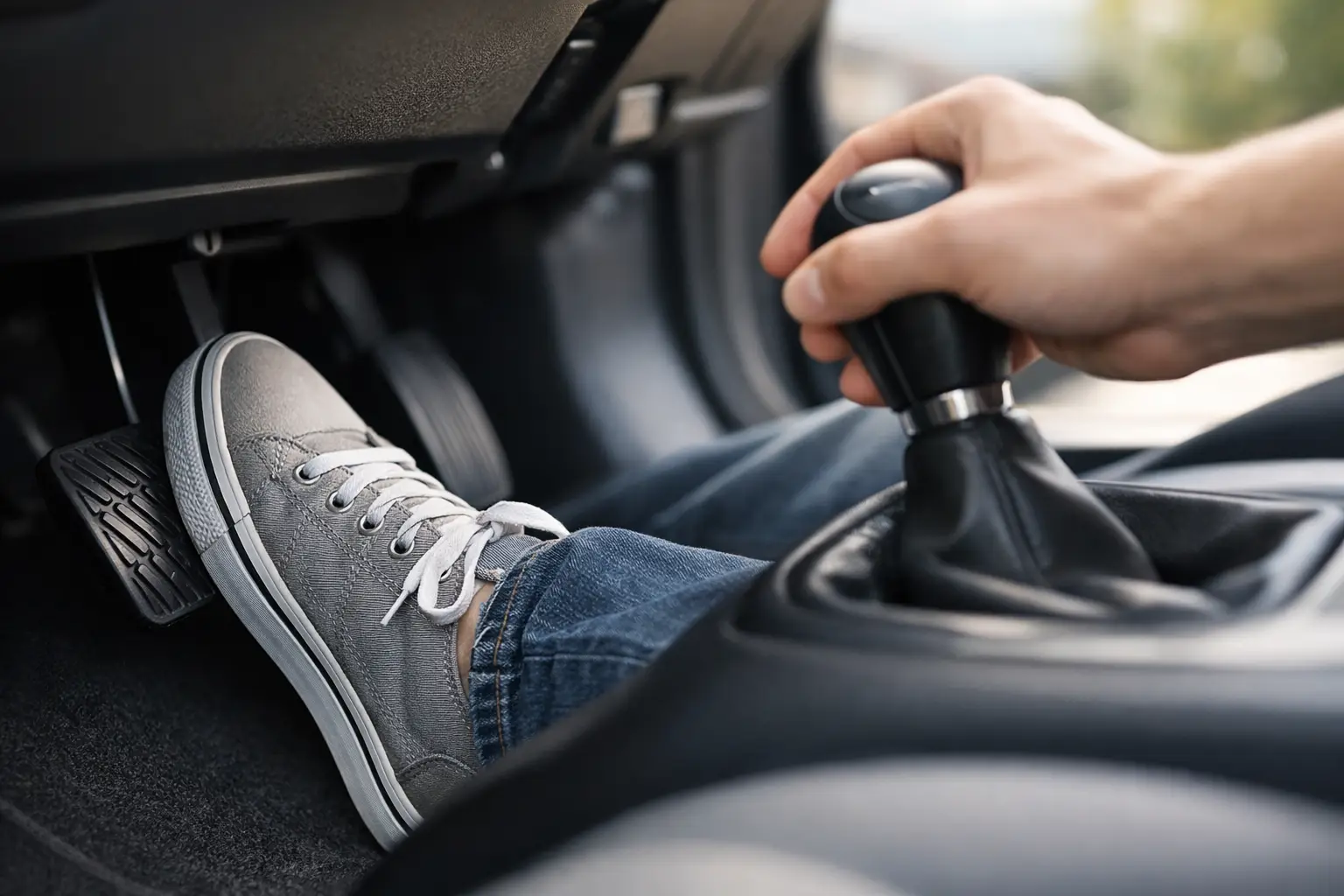
That moment when the car shudders, your left foot panics, and the engine cuts out at a busy junction can make clutch control feel far more dramatic than it really is. The truth is, this guide to learning clutch control smoothly starts with one reassuring fact - nearly every manual learner has done exactly the same thing. Usually more than once.
Clutch control is not about having magic feet. It is about timing, feel and repetition. Once you understand what the clutch is doing and give yourself enough calm practice, it starts to make sense. Then, instead of fighting the car, you begin to work with it.
Why clutch control feels awkward at first
A manual car asks your hands and feet to do different jobs at the same time. Your left foot controls the clutch, your right foot manages the accelerator and brake, your left hand changes gear, and your brain tries to keep up with road signs, mirrors and that pedestrian who suddenly appears near the crossing. For a beginner, that is a lot.
The awkward part is usually the clutch bite point. This is the point where the clutch plates start to connect and the car begins to move. Lift too quickly and the engine stalls. Hold it too long and the car can feel strained. Add nerves and it is easy to see why smooth starts do not happen instantly.
That does not mean you are a poor driver. It means you are learning a mechanical skill. Like steering accurately or reversing into a bay, it improves with patient, structured practice.
A practical guide to learning clutch control smoothly
The easiest way to learn clutch control is to stop treating it as one big skill. It is really a series of smaller actions done in the right order.
Start by understanding the bite point
Press the clutch fully down before selecting first gear. Then, with the handbrake on, begin lifting the clutch slowly until you notice a change in the car. The sound of the engine may dip slightly, the front of the car may lift a touch, and you may feel the car wanting to move.
That is the bite point.
Many learners rush past it because they expect a dramatic signal. In reality, it is often subtle. Your instructor will help you recognise it, but the key is patience. If your foot comes up too quickly, you skip the useful feedback the car is giving you.
Learn to pause, not freeze
Once you reach the bite point, pause briefly. Not for ages - just enough to let the car settle and prepare to move. This is where many smooth getaways are made or lost.
A common mistake is freezing at the bite for too long because you are frightened of stalling. That can make the car struggle. The opposite mistake is lifting the clutch right up in one go. Smooth clutch control sits between those two extremes.
Add a little accelerator when needed
Some cars are forgiving and will move off on the clutch alone on flat ground. Others prefer a touch of petrol. That is why clutch control is partly technique and partly feel.
A small amount of accelerator helps the engine stay strong as the clutch lifts. Too much, though, and the car may surge forward. For new drivers, gentle inputs are nearly always better than dramatic ones. Think measured, not hurried.
What smooth clutch control actually feels like
When learners hear the word smooth, they often imagine something incredibly precise. In practice, smooth means the car moves away without jolting, stalling or racing. It feels controlled.
Your feet should not be stamping or snatching. They should be easing. If a move-off feels scrappy, ask yourself whether you lifted too quickly, added too much accelerator or rushed because another driver was waiting behind you.
That last one matters. Pressure from traffic can make learners abandon good habits. If somebody behind you seems impatient, let them be impatient. Better a steady move-off than a flustered stall.
Hill starts are where confidence grows
Flat-road practice is useful, but hill starts are where clutch control really starts to click. They teach you how to balance the clutch, accelerator and handbrake with better accuracy.
On a hill, bring the clutch to the bite point and add enough accelerator to prepare the car to move. You should feel the car wanting to pull. Then release the handbrake and continue lifting the clutch smoothly as the car moves off.
If the car rolls back slightly while learning, do not panic. That is exactly why hill starts are practised with an instructor in a safe, controlled way. Over time, your feet become more coordinated and the rollback disappears or becomes minimal.
It also depends on the car. Some modern cars have hill assist, which gives you a moment before rolling back. Others do not. It is helpful when a car offers that support, but it is still worth learning the core skill properly.
How to practise clutch control without overwhelming yourself
The best practice is focused, not endless. Twenty minutes of calm repetition on quiet roads can do more for your progress than an hour of tense driving in heavy traffic.
Start with moving off and stopping. Then repeat. Once that feels steadier, add gentle turns at junctions. Then introduce hill starts. Leave multi-lane roundabouts and busy town-centre traffic until your basic clutch control is more settled.
There is no prize for making your lessons harder too soon. Good instruction should stretch you, not scramble you.
For many learners, one-to-one tuition makes a real difference here because the lesson can be adjusted to your pace. If clutch control is your sticking point, a tailored session gives you time to work on it properly rather than being rushed on to the next topic.
Common reasons learners stall
Stalling is frustrating, but it is usually caused by one of a few simple issues. Most often, the clutch comes up too fast before the car is ready. Sometimes there is not enough accelerator. Sometimes the learner is in the wrong gear. And sometimes nerves make everything happen in the wrong order.
The useful question is not, "Why am I so bad at this?" It is, "What exactly happened with my feet and hands just before the stall?"
That small change in thinking matters. It turns the problem from personal failure into a fixable driving skill.
Manual cars are not all the same
One reason clutch control can feel inconsistent is that different cars respond differently. Some clutches bite higher, some lower. Some feel light and forgiving, others need a steadier foot. Petrol and diesel cars can also feel different when moving off.
That is why learners sometimes say, "I could do it in one car but not another." Fair enough. You are not imagining it.
The good news is that strong technique carries across. Once you know how to find the bite, hold control and match it with the accelerator, you adapt much faster to a different vehicle.
Staying calm when it goes wrong
You will probably stall again while learning. That is normal. What matters is how you recover.
Secure the car, restart the engine if needed, set up properly and go again. No drama, no self-criticism, no declaring that you will "never get this". Driving rewards calm resets.
A patient instructor helps here because confidence grows faster when mistakes are treated as part of the lesson rather than a disaster. At D4Driving School of Motoring, that calm, tailored approach is exactly what helps nervous learners make steady progress in a manual car.
When clutch control finally starts to click
It rarely arrives in one glorious moment. Usually, you notice that you have moved off cleanly several times without overthinking it. Your feet become less tense. You stop staring at the gear stick as though it has personally offended you. The car feels less like a machine you are trying to defeat and more like something you can manage.
That is real progress.
If you are learning now, be patient with yourself. Smooth clutch control is built through repetition, clear guidance and a bit of humour when things go wonky. Keep practising the basics well, and one day the part that feels hardest now will simply feel normal.