
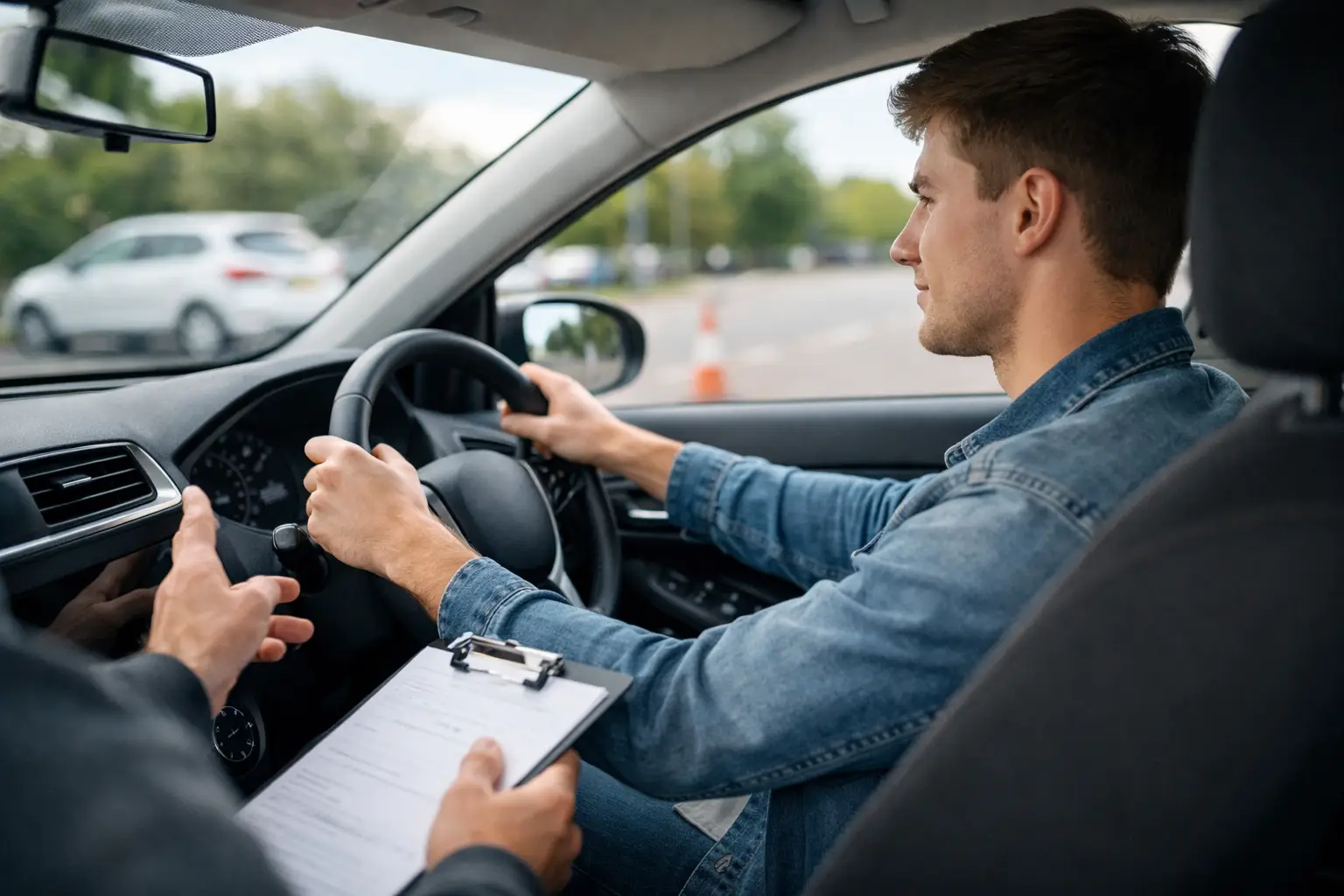
That first driving lesson tends to live in your head far longer than it deserves. You worry about stalling, clipping the kerb, forgetting where the brake is, or somehow managing all three at once. A complete guide to driving lessons should do one thing above all else - make the process feel clearer, calmer and far less mysterious.
Learning to drive is not just about passing a test. It is about building safe habits, making good decisions under pressure and getting to the point where the car feels less like a machine you are wrestling with and more like an extension of your judgement. That takes time, and it rarely happens in a straight line.
What driving lessons should actually give you
Good driving lessons are not simply a weekly hour of being told when to indicate. They should give you structure, honest feedback and a sense that you are moving forward, even when a lesson feels scrappy. One week you may nail junctions and forget how to reverse. Another week, roundabouts suddenly click. That is normal.
The best instructors teach the person, not just the syllabus. Some learners need a slow, steady build from the basics. Others are confident early on but need help polishing observation, planning and consistency. A teenager starting from scratch and an adult returning to driving after years away may both need reassurance, but not in the same way.
That is why tailored lessons matter. A one-size-fits-all approach sounds efficient until you are the one sitting in the driver’s seat wondering why everyone else appears to be doing manoeuvres while you are still getting comfortable with clutch control.
The complete guide to driving lessons starts with choosing the right type
One of the first decisions is whether to learn in a manual or an automatic. There is no universally right answer. There is only the better fit for your goals, confidence level and how you want to drive in future.
Manual lessons give you more flexibility once you pass, because a manual licence allows you to drive both manual and automatic cars. If you want the widest choice of cars later on, or you simply prefer learning the full mechanics of driving, manual makes sense. It can, however, take longer for some learners to feel settled because you are juggling clutch, gears and speed control alongside everything else.
Automatic lessons remove part of that workload. For nervous learners, or anyone who wants to focus more quickly on road awareness and decision-making, that can be a real advantage. The trade-off is that an automatic-only pass limits what you can legally drive.
Neither option is a shortcut to being a safe driver. Automatic can feel easier at first, but you still need strong observation, positioning, anticipation and hazard awareness. Manual can feel harder early on, but many learners like the control once it clicks. If you are unsure, talk it through before booking a block of lessons and be honest about what is making you hesitate.
What happens in your first few lessons
The early stage is usually less dramatic than people expect. You are not thrown onto a dual carriageway in the first ten minutes and told to crack on. A sensible start covers cockpit checks, moving off, stopping safely, steering control and getting used to the feel of the car.
You will also begin learning the routines that matter throughout your driving life, not just for the test. Mirrors, signals, speed choice, road position and basic anticipation all begin here. It may seem repetitive, but repetition is how driving starts to feel natural.
A patient instructor will build these steps in a way that matches your progress. Some learners are ready for busier roads quickly. Others need a little more time on quieter routes before adding junctions, roundabouts or independent decision-making. That is not slower progress. That is better sequencing.
How often should you have lessons?
This depends on your budget, availability and how quickly you want to progress, but consistency matters more than heroic intentions. One lesson every now and then can leave you spending half the session remembering what you did last time. Regular weekly lessons usually work better because they keep momentum going.
Longer sessions can also help. A two-hour lesson often gives enough time to practise, make mistakes, correct them and then repeat the skill properly. With a shorter lesson, you may just be warming up when it is time to head home. On the other hand, if you are very anxious or mentally drained by driving, a shorter block may suit you better at first.
There is no medal for learning in the fewest hours possible. The goal is not speed for its own sake. It is becoming safe, competent and calm enough to drive without your instructor acting as your second brain.
What you are really paying for
When people compare lesson prices, they often look only at the hourly rate. That matters, of course, but it is not the whole picture. Driving lessons are not like buying socks. Cheaper is not always better value.
You are paying for professional instruction, planning, feedback and the ability to spot problems before they become habits. A good instructor notices whether you are hesitating for the right reasons, scanning properly at junctions, or steering well but planning poorly. That level of detail is what helps lessons become progress rather than just time spent in a car.
Transparent pricing also matters because it lets you plan sensibly. Clear lesson lengths, clear costs and no vague sales patter make it much easier to choose what works for your schedule and budget.
How to tell if your driving lessons are working
Progress in driving is not always obvious in the moment. You may come away from a lesson feeling you were terrible, when in fact you handled more complex roads than ever before. Confidence and competence do not always rise at the same speed.
A useful sign of progress is not perfection. It is recovery. Are you spotting mistakes earlier? Are you correcting them with less prompting? Are you planning further ahead rather than reacting late? Are familiar routes beginning to feel less demanding? Those are strong indicators that your learning is bedding in.
You should also expect clear feedback. Not endless criticism, and not empty reassurance either. Useful teaching is specific. It tells you what went well, what needs work and what the next step is. If every lesson feels random, it is hard to build momentum.
Test preparation is more than mock tests
By the time your practical test is approaching, you should not just be able to complete manoeuvres and follow directions. You should be able to drive safely when things do not go to plan. A pedestrian steps out. A car appears quickly on a mini-roundabout. A sat nav instruction lands a touch late. Real test readiness is about handling those moments without panic.
Mock tests can help, but only if they are used properly. They are there to expose weak areas, not to frighten you into thinking the examiner is waiting to catch you out. If a mock test shows repeated faults with observation or lane discipline, that is useful. It gives you something concrete to fix.
Focused preparation sessions can make a real difference here, especially if you already know the basics but need to sharpen consistency before test day. That is often where learners make the jump from almost ready to properly prepared.
Common worries learners have and what usually helps
Most learners worry they are behind. Behind friends, behind a sibling, behind some imagined ideal learner who never stalls and glides through roundabouts like a motoring advert. Try not to measure yourself against other people’s timelines. Driving is skill-based, and skill develops unevenly.
Nervous learners often improve fastest when the pressure comes down. If you are terrified of getting something wrong, you can end up so tense that even simple tasks feel harder. Calm, instructor-led coaching helps because it gives you room to think, try again and build confidence from evidence rather than hope.
Adult learners sometimes carry extra pressure because they feel they should pick it up quickly. In reality, adults often bring strong road awareness and maturity, but may also overthink every decision. Teenagers may be more relaxed but need longer to develop judgement. Again, it depends.
Getting the most from your lessons
Turn up ready to learn, not ready to impress. You do not need to prove anything in a driving lesson. If a topic confused you last time, say so. If roundabouts make your stomach drop, mention it. If you want extra practice on bay parking before your test, ask.
It also helps to reflect between lessons. You do not need a spreadsheet and a highlighter set. Just think about what felt better, what still felt awkward and what you want to tackle next. Learners who engage with the process usually progress more steadily because the lesson does not start from zero every time.
At D4Driving School of Motoring, that learner-first approach matters because good teaching is not about rushing you through a checklist. It is about building skill, confidence and safe habits in a way that suits how you actually learn.
Driving freedom is brilliant, but the real win is quieter than that. It is the moment you pull away, read the road ahead and realise you are no longer just trying to cope. You are in control, and that changes everything.