
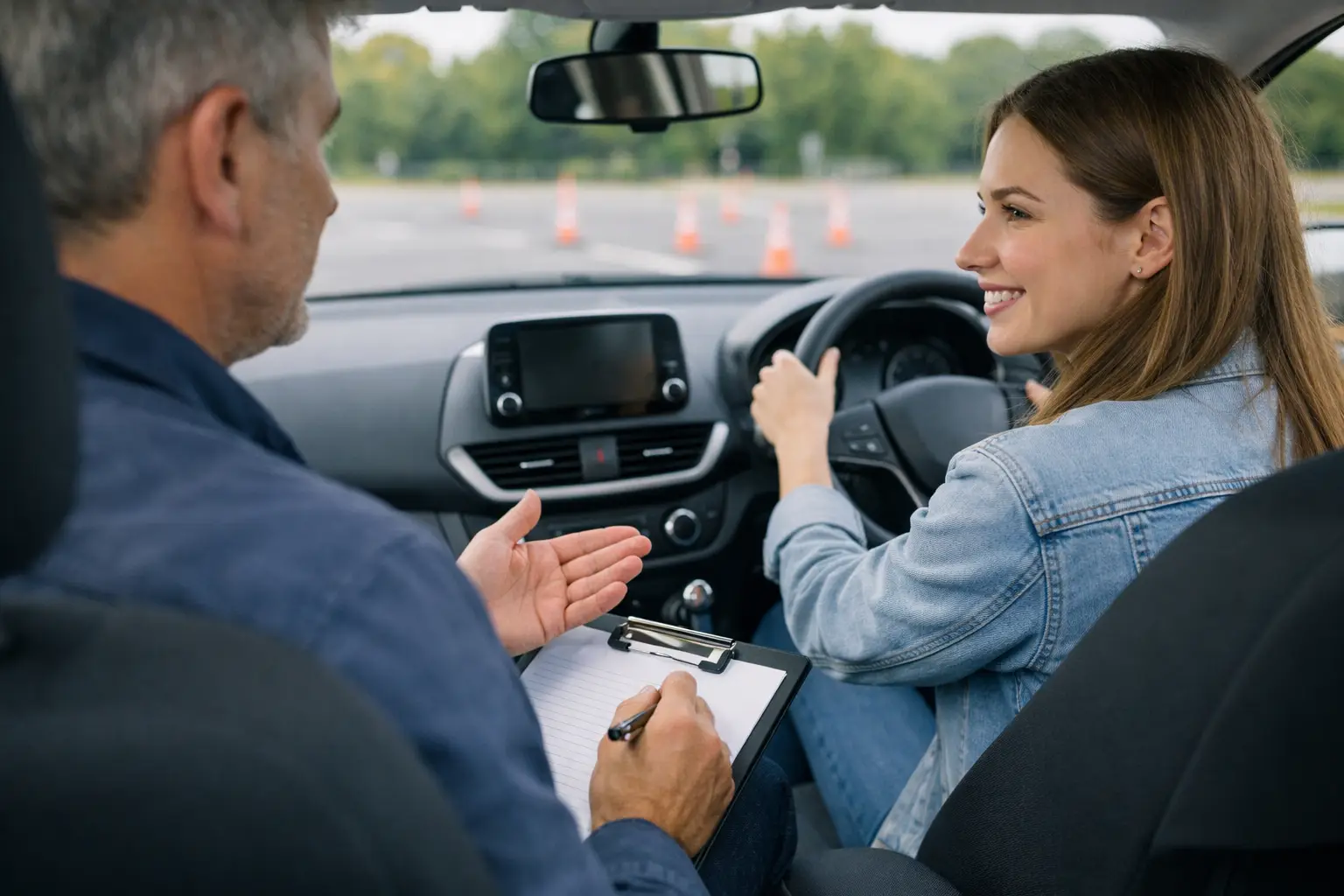
That first lesson can feel bigger than it is. One minute you are thinking about freedom, weekend plans and never begging for lifts again. The next, you are wondering whether you are about to stall in front of everyone. The good news is that the best first driving lesson tips are usually very simple: turn up prepared, expect a steady start, and remember that nobody is asking you to drive like a test-ready learner on day one.
A good first lesson is not about impressing anyone. It is about getting comfortable in the car, understanding the basics and starting to build the habits that make safe, confident driving possible. Whether you are 17 and buzzing with nerves, or coming to lessons later in life, the same truth applies - your first hour is the foundation, not the finish line.
The best first driving lesson tips start before you move off
Most nerves come from not knowing what is about to happen. In reality, your first lesson is usually calm and structured. Your instructor will want to get a feel for your experience level, explain the cockpit drill, talk you through the controls, and make sure you are settled before the car goes anywhere.
So the first job is simply to arrive in the right frame of mind. Wear comfortable shoes with thin soles so you can feel the pedals properly. Bring your provisional licence if your instructor has asked to see it. If you wear glasses for distance, wear them. And if you are tired, stressed or running on nothing but an energy drink and panic, that will show up in your concentration.
Try to treat the lesson like a practical coaching session rather than some dramatic life event. You do not need to prove that you are naturally brilliant. You need to be teachable, honest and ready to listen.
What to expect in your first driving lesson
This is where a lot of learners relax, because the lesson is usually slower and more guided than they imagined. You are unlikely to be launched straight into a busy roundabout while your instructor sits there silently judging your every move.
In most cases, the lesson begins with the basics. You will be shown how to adjust the seat and mirrors, how the pedals work, what the handbrake does and how the gears work if you are learning in a manual. Your instructor may explain moving off and stopping before you try it yourself in a quiet area.
That matters because confidence comes from knowing what each part of the car is doing. When a learner feels overwhelmed, it is often because too many things seem to happen at once. A patient instructor breaks that down into manageable steps.
If you are learning in an automatic, your first lesson may feel simpler because there is less to think about with gear changes and clutch control. That does not make it less valid. It just changes where your attention goes. The right choice depends on your goals, your confidence level and how you prefer to learn.
Be honest about your nerves
One of the best first driving lesson tips is also one of the most overlooked: tell your instructor how you are feeling. If you are nervous, say so. If you have never even sat in the driver’s seat before, say so. If your uncle took you to an industrial estate once and now you have half-learned three bad habits, definitely say so.
A good instructor is not there to be impressed. They are there to teach. The more honest you are, the easier it is to adapt the lesson to suit you. Some learners need lots of explanation before trying something. Others learn better by doing it, then talking it through. Neither approach is wrong.
This is where one-to-one tuition makes a real difference. Tailored teaching means the pace can fit the learner, not the other way round. That is often what turns a stressful first lesson into a genuinely positive one.
Focus on one thing at a time
New drivers often think they should be able to steer, check mirrors, judge speed, find the biting point, signal correctly and read the road all at once from the very beginning. That is not how learning works.
Your brain is building a new set of routines. At first, everything feels deliberate. You will probably need to think hard about tasks that later become automatic. That is completely normal.
So if you want practical first lesson advice, here it is: do not chase perfection. Focus on the step you are on. If you are learning to move off, focus on moving off smoothly. If you are practising steering, focus on where the car is going. Your instructor will help manage the rest.
Trying to get everything right at once usually makes learners tense. Tension leads to jerky control, missed instructions and that horrible feeling that the car is doing too much, too quickly. Slower thinking is often better driving.
Ask questions, even the obvious ones
There is no prize for pretending you understand something when you do not. If you are unsure what the clutch actually does, ask. If left and right still get tangled in your head when someone says it quickly, ask for clearer directions. If you do not understand why you stalled, ask again.
The learners who progress well are not always the boldest. They are often the ones who stay curious. Driving is full of small decisions, and understanding the reason behind them helps those decisions stick.
Good teaching should feel clear, not intimidating. If something needs breaking down into smaller chunks, that is not a problem. It is part of the process.
Your mistakes are useful
You will probably make one. Maybe several. You might stall, brake too sharply, drift a little with the steering or forget a step in the routine. Welcome to being a beginner.
Mistakes in early lessons are not signs that you cannot drive. They are the normal evidence of someone learning a new skill. In fact, they are often the most useful moments in the lesson because they show your instructor exactly what support you need next.
What matters is what happens after the mistake. A calm explanation, another go, and a small improvement - that is progress. Learners who expect a flawless first lesson usually leave feeling disappointed. Learners who expect to learn usually leave feeling stronger.
Do not compare yourself with anyone else
This catches out teenagers and adults alike. Your friend may have had two lessons and be posting about mini roundabouts as if they were born for the open road. Good for them. That has nothing to do with your lesson.
Some people take to car control quickly but need longer on planning and awareness. Others are tentative at first and then improve rapidly once their confidence clicks into place. Progress is not linear, and it is rarely identical from one learner to another.
The better question is whether you are improving from your own starting point. Can you do one thing this week that felt difficult last week? If yes, you are moving in the right direction.
The right instructor matters more than people admit
A first lesson is not just about driving. It is also about whether you feel safe, listened to and properly supported. Technique matters, of course, but so does the atmosphere in the car.
A patient, instructor-led approach can make a huge difference, especially for nervous learners. You want someone who explains clearly, stays calm under pressure and notices when you need more time on a skill rather than pushing on too quickly. The best lessons build confidence and standards together.
That is why personalised planning matters. A learner who needs lots of repetition in quiet roads should not be rushed. A learner with previous experience may need a different starting point altogether. At D4Driving School of Motoring, that tailored approach is exactly what helps learners turn early nerves into measurable progress.
After the lesson, keep it simple
You do not need to spend the evening replaying every wobble in your head. Instead, think about two things: what went better than you expected, and what you want to feel clearer on next time.
If your instructor gives you feedback, take it seriously but do not turn it into a verdict on your ability. Early feedback is there to guide you, not to knock your confidence. You are supposed to have things to work on.
It can help to jot down a few notes after the lesson while it is still fresh. Not a full essay - just a reminder of what you covered and what you found tricky. That makes the next lesson feel more familiar before it even starts.
A final word on confidence
Confidence is not something you need before your first lesson. It is something you build because of it. Most learners start with a mixture of excitement and nerves, and that is perfectly reasonable when you are learning a skill with real responsibility behind it.
The best first driving lesson tips are not about acting fearless. They are about starting sensibly, learning at the right pace and giving yourself room to improve. If your first lesson leaves you thinking, right, I can do this - even if you stalled twice and gripped the wheel a bit too tightly - then it has done exactly what it needed to do.